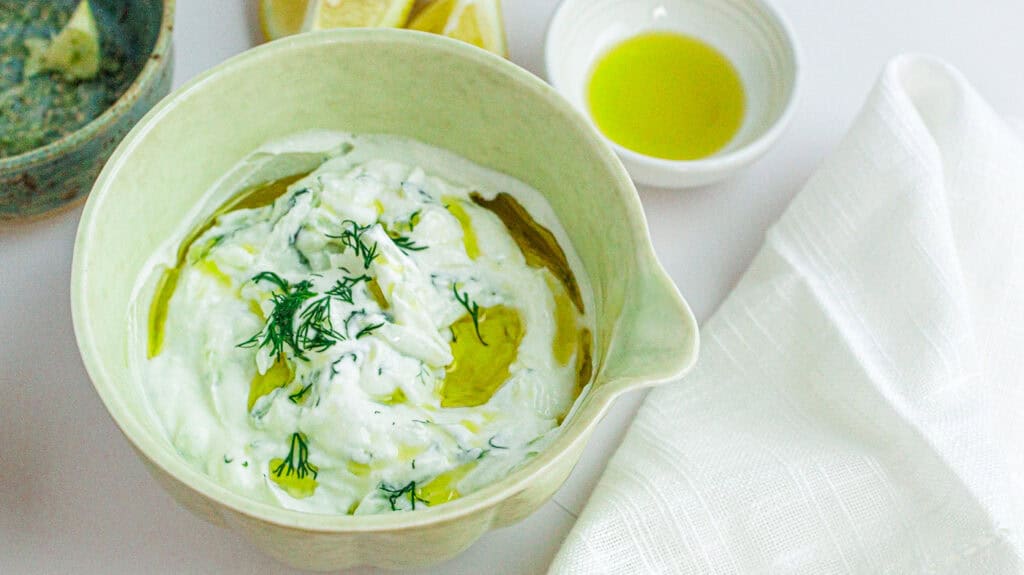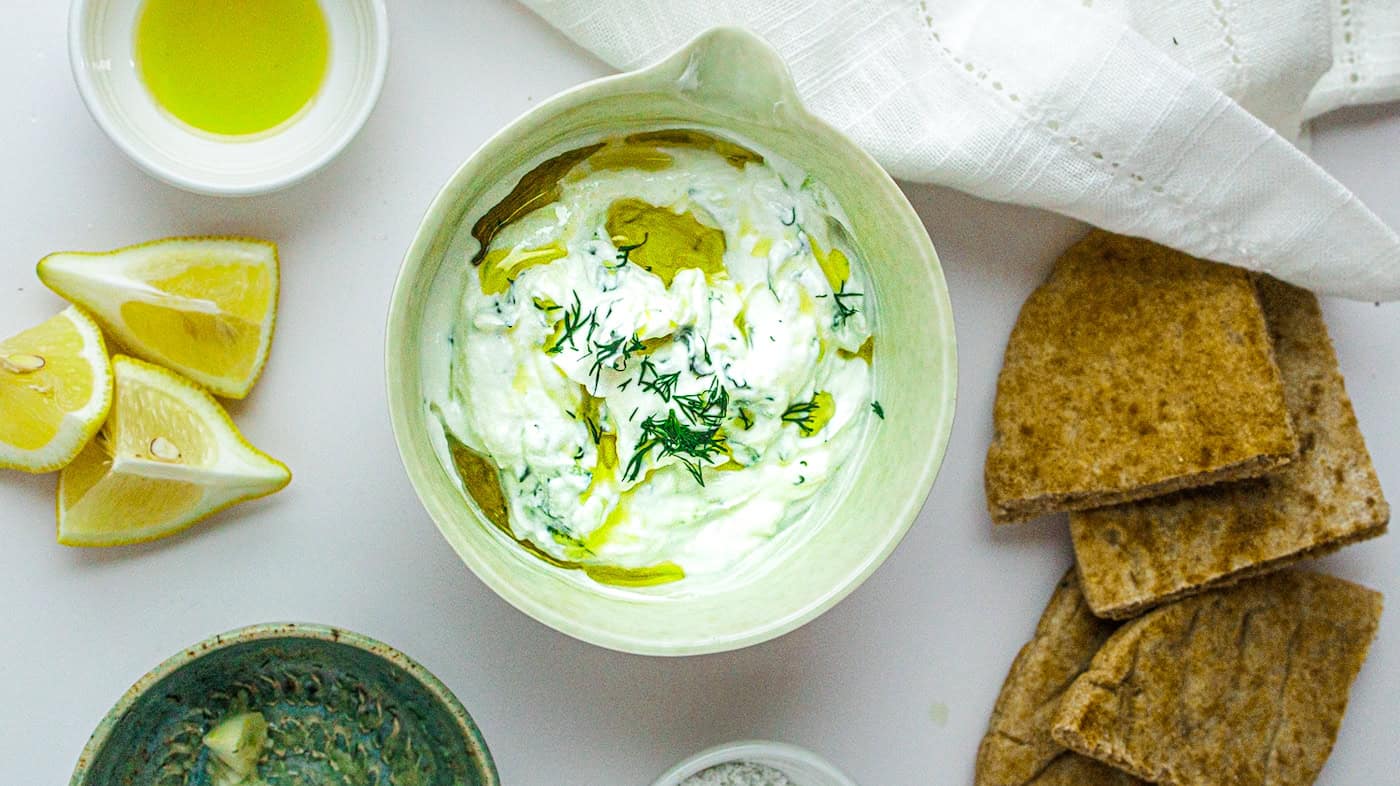
This high-protein Greek yogurt tzatziki dip has basically taken up permanent residence in my fridge. It started out as my way of dealing with the inevitable Greek yogurt surplus (why do I always buy the giant tub?), but now it’s the snack I reach for first, the one I pack up for friends, and the one I double up on when the week looks a little too busy for comfort.
What I love most about this dip is how un-fancy it is. No cooking, no weird ingredients, and maybe ten minutes of actual effort. Somehow, it still manages to taste like something you’d get at a restaurant, one of those rare wins that makes you feel good about what you’re eating.
Why This Recipe Works
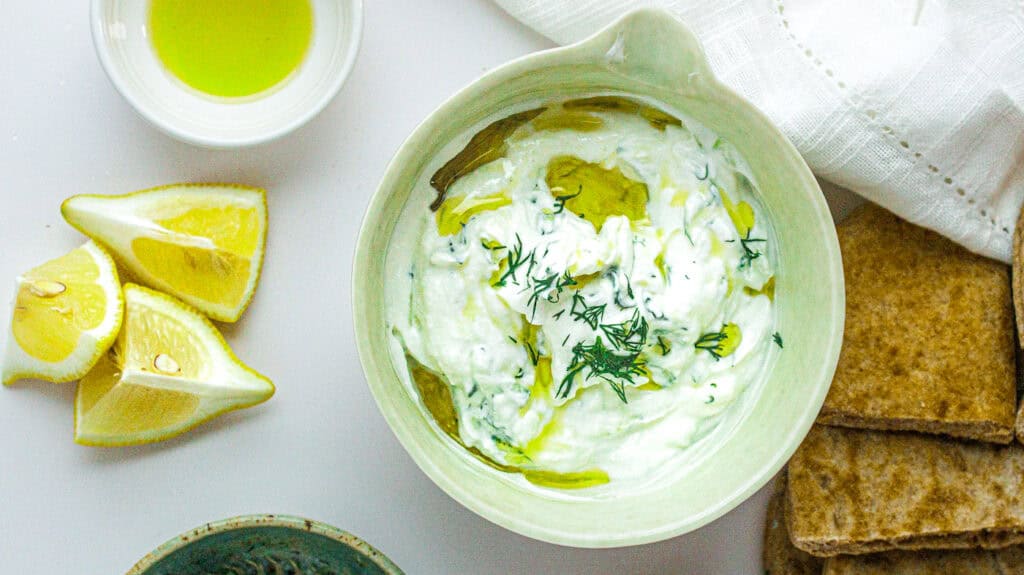
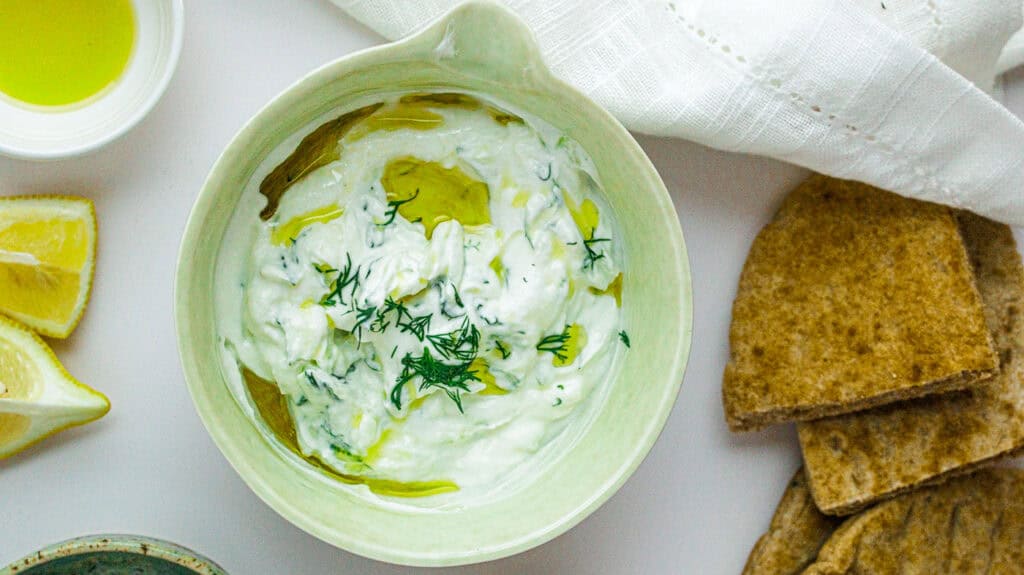
If you haven’t tried it yet, picture a bowl of creamy yogurt swirled with grated cucumber, garlic, lemon, and dill; cool, fresh, and just the right amount of tang. I’m sharing my go-to recipe here, along with a few easy ways to mix it up, so you can use it as a dip, a spread, or just drizzle it over anything that looks like it needs a little love.
If You’re on a GLP-1
I learned pretty quickly on my own tirzepatide journey that the usual diet meals just don’t hit the same anymore. When your stomach is moving at a snail’s pace, anything heavy or greasy can leave you feeling like you swallowed a brick. But you still need to get enough protein in to keep your muscles from complaining.
Each half-cup serving of this High-Protein Greek Yogurt Tzatziki Dip gives you 11 grams of protein, which is a big deal for me these days. When you’re eating less; whether by choice or because your appetite has gone on vacation, you want every bite to count. This dip does that in a quiet, delicious way, which is exactly what I’m always hoping for.
It’s made with thick Greek yogurt, lots of fresh dill, and cool cucumber, so it’s gentle on your stomach but still brings the protein. It’s light, crisp, and honestly, it’s one of the few things I can always count on to sit well—even on those days when nothing else sounds good. If you’re sensitive to dairy or garlic (especially on a GLP-1), swap in a good dairy-free yogurt like coconut or cashew, and use a pinch of garlic powder or skip it altogether. Everyone’s body is different, so tweak it until it feels right for you.
My Favorite Pairing Suggestions
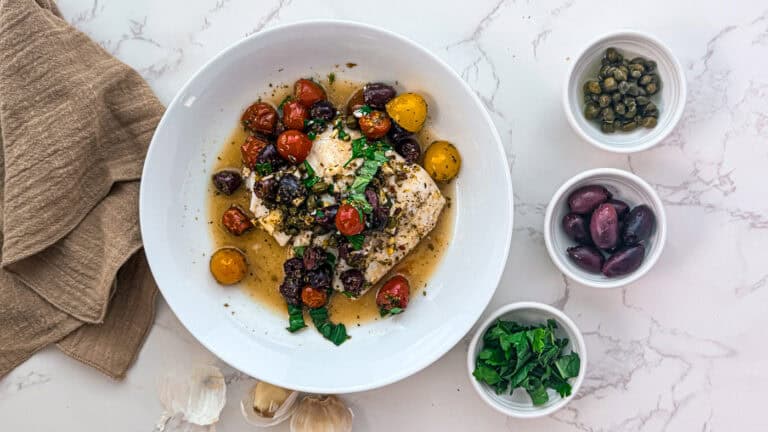
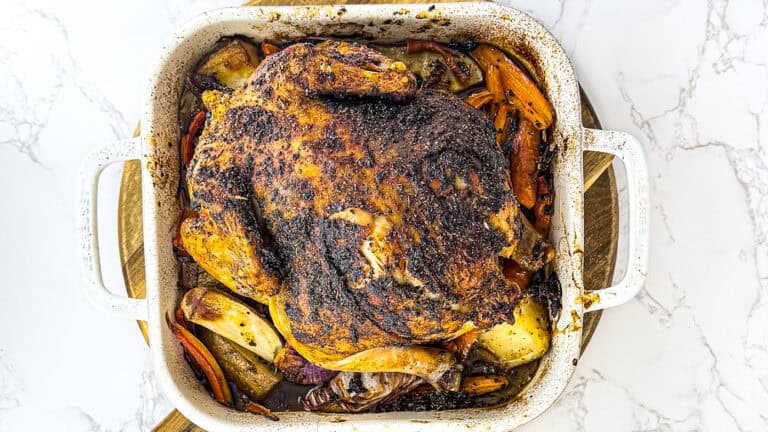
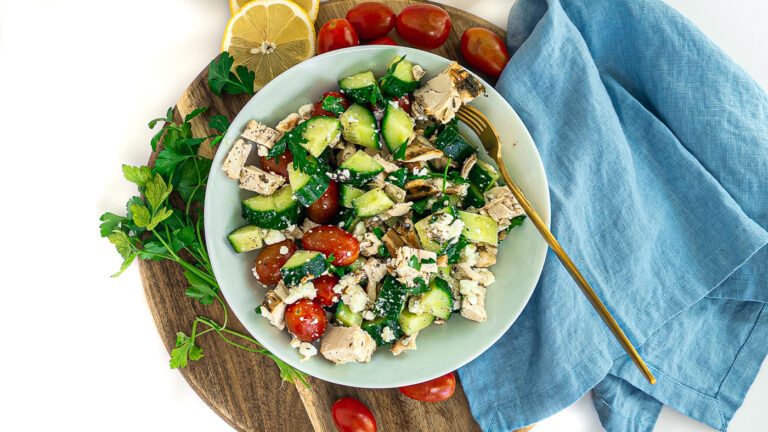
I usually have a batch in the fridge, ready to go for my Mediterranean Chicken Bowl, GLP-1 Chicken Salad, or as a healthy topper for my Mediterranean Burger. It’s also perfect for dipping Greek yogurt flatbread or Lemon-Herb Chicken when I need a quick snack and don’t want to think too hard about it.
Why You’ll Love This Tzatziki Dip
- Ready in under 15 minutes with no cooking required
- 11 grams of protein per serving from whole, real ingredients
- Works as a dip, spread, sauce, or topping for grilled protein
- Tastes far more impressive than the effort it takes to make
- Keeps in the fridge for up to 4 days
- Made with ingredients you probably already have
- Naturally gluten-free and low in carbohydrates
- It’s actually satisfying, so you’re not back in the kitchen hunting for something else half an hour later.
Ingredients Notes & Smart Swaps
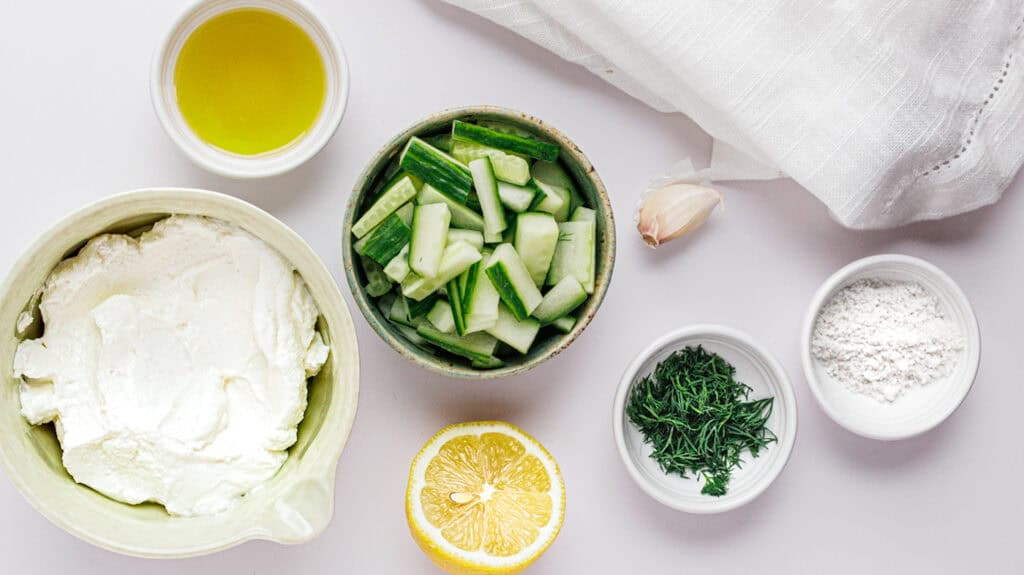
This High-Protein Greek Yogurt Tzatziki Dip includes high-quality, simple ingredients that adds flavor, texture, or a little nutrition boost. Below, I’ll break down what each part adds, and how to pick the freshest and healthiest ingredients from the store.
What Goes In and Why It Works
- Greek Yogurt: The foundation of everything here. Full-fat Greek yogurt is thick, naturally high in protein, and gives this creamy Greek yogurt dip its body and richness without any fillers or thickeners.
- Cucumber: Grated and squeezed very dry, the cucumber adds freshness and a subtle crunch without overpowering the yogurt. It lightens the texture and brings a cool, clean flavor that’s classic to any good tzatziki.
- Extra Virgin Olive Oil: Just one tablespoon, but you will notice it. Olive oil gives the dip a silky finish and rounds out the flavor beautifully. It is also a cornerstone of Mediterranean eating, bringing heart-healthy monounsaturated fats to every serving.
- Lemon Juice: Fresh lemon juice elevates the whole dip and brightens the yogurt’s natural tang. It balances the garlic and ties the flavors together. Always use fresh, not bottled. The difference is very noticeable.
- Garlic: One small clove, grated fine. Garlic gives tzatziki its depth and its signature bite. Grating it rather than mincing distributes it more evenly and mellows the raw edge, so you get garlic flavor throughout rather than sharp, uneven pockets.
- Fresh Dill: Dill is what makes tzatziki taste like tzatziki. It is aromatic, slightly grassy, and completely irreplaceable here. Fresh is best. Dried will work if needed, but use about one-third the amount since dried herbs are more concentrated.
- Sea Salt: Salt draws out the flavor of every other ingredient and makes the whole dip come alive. Start with 1/4 teaspoon and adjust after tasting.
Substitutions for the Tzatziki Dip
- Greek Yogurt: Full-fat is the best choice for protein and texture, but 2% Greek yogurt works well if that’s what you have. Skyr is an excellent swap with a slightly higher protein content per serving. For a dairy-free version, use a thick coconut yogurt or cashew-based yogurt, though the protein content will be lower.
- Cucumber: English and Persian cucumbers are ideal. If you only have a standard cucumber, peel it first and scrape out the seeds before grating to reduce excess moisture.
- Olive Oil: Avocado oil is the closest substitute in flavor and fat profile and won’t noticeably change the recipe.
- Lemon Juice: White wine vinegar works as a swap. Use slightly less since vinegar is sharper than fresh lemon.
- Fresh Dill: If fresh dill isn’t available, dried dill works in a pinch. Use 1/2 to 1 teaspoon instead of 1 to 2 tablespoons. Fresh mint or parsley can also work for a different, equally fresh flavor profile.
- Garlic: If raw garlic is too sharp for your taste, substitute 1/4 teaspoon garlic powder or use one small roasted garlic clove for a milder, slightly sweeter flavor.
How to Make the High-Protein Greek Yogurt Tzatziki Dip
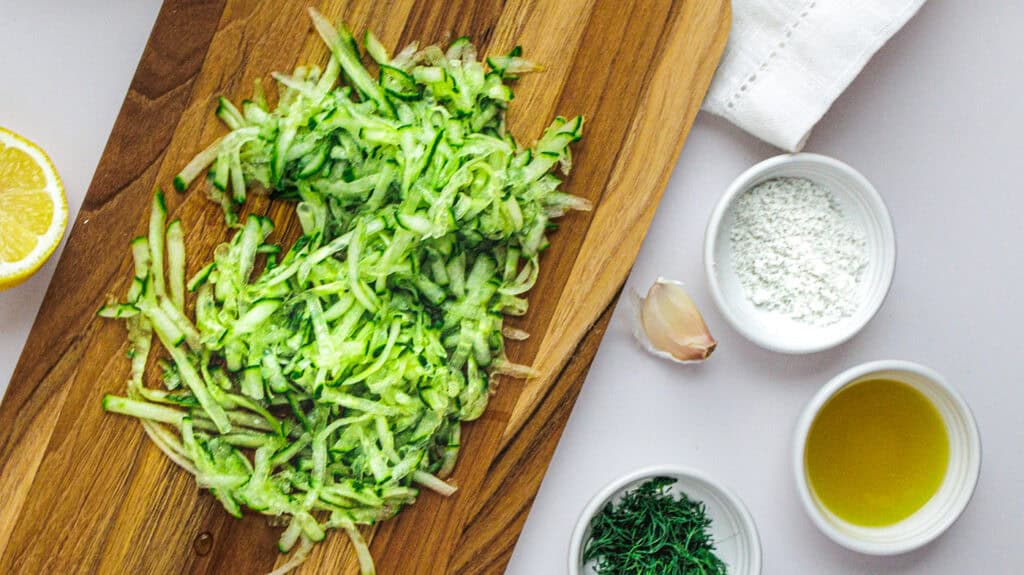
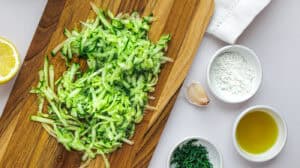
Start by grating the cucumber. Then, grab a clean kitchen towel, wrap up the grated cucumber, and squeeze it like you mean it. Get it as dry as you can; seriously, this is the one step you don’t want to rush. Any extra water will turn your dip into a sad, watery mess in no time. If you need to, squeeze it twice. The towel should come away dry, not soggy.
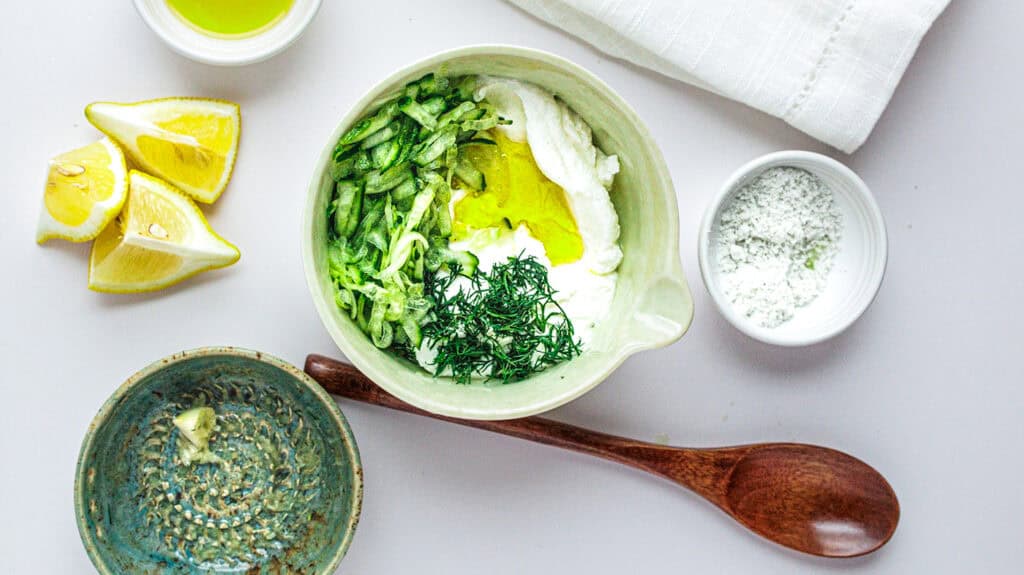
Next, grate your garlic instead of mincing it. A microplane or the fine side of a box grater turns it into a smooth paste that disappears into the yogurt. Minced garlic leaves those sharp little bits that can make the dip taste harsh. Then, just mix everything; Greek yogurt, olive oil, lemon juice, garlic, dill, salt, and cucumber, in a bowl.
Finally, let it chill before you dig in. Ten minutes is the bare minimum, but thirty is even better. Resting gives the garlic a chance to mellow out and lets the dill work its magic. If you skip this step, the dip will taste a little flat. Give it a little time, and it turns into something special.
High-Protein Greek Yogurt Tzatziki Dip
Equipment
- 1 Microplane
- 1 Vegetable shredder
- 1 Small mixing bowl
- 1 Spoon
Ingredients
- 1 cup Greek yogurt full-fat
- 1/2 cup cucumber
- 1 tbsp olive oil
- 1 small garlic clove
- 2 tbsp dill fresh, finely chopped
- 1 tbsp lemon juice
- 1/4 tsp sea salt
Instructions
- Grate the 1/2 cup cucumber , then squeeze out as much liquid as possible using a clean towel or your hands.
- In a bowl, combine the 1 cup Greek yogurt, 1 tbsp olive oil, 1 small garlic clove, 2 tbsp dill, 1 tbsp lemon juice, the cucumber, and 1/4 tsp sea salt.

- Chill at least 10 minutes before serving so the flavors meld.
Notes
- Store in an airtight container in the fridge up to 4 days.
Nutrition
Frequently Asked Questions