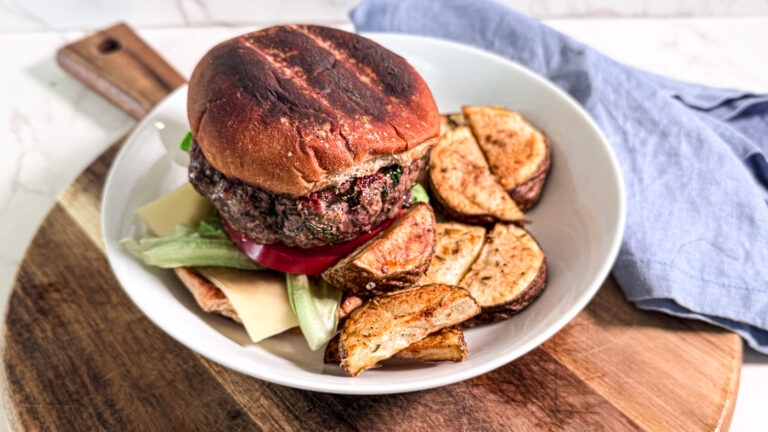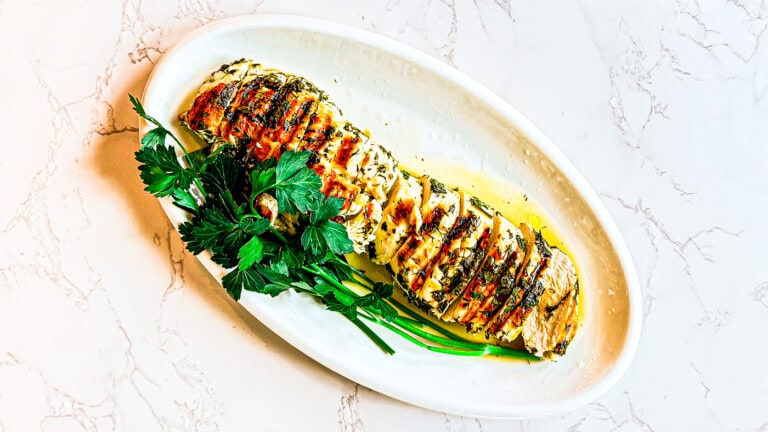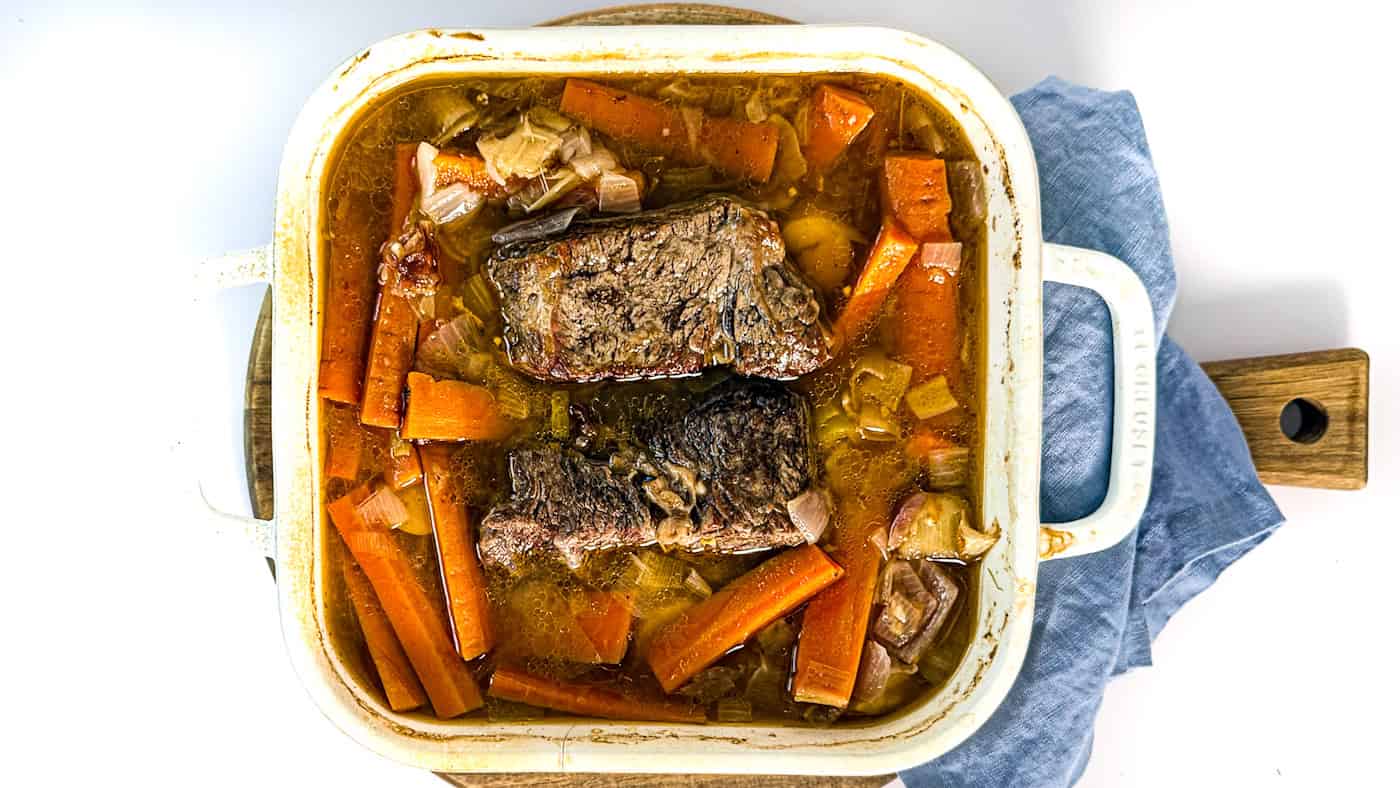
Some weeks, the kitchen seems to have a mind of its own. I started out with a big plan, a rotisserie chicken that ended up a little sad, a ciabatta loaf that tasted okay but looked like it needed a good Instagram filter. Eventually, I scrapped the whole thing and went with this pot roast with carrots and onions. It wasn’t what I planned, but it was exactly what I needed.
Why This Recipe Works
This isn’t one of those recipes that asks you to buy a dozen new spices or learn a new technique. It’s just slow heat, a handful of vegetables, and beef doing its thing, turning into something cozy and comforting, especially on the days when you need a little extra help.
Meal Prep Friendly
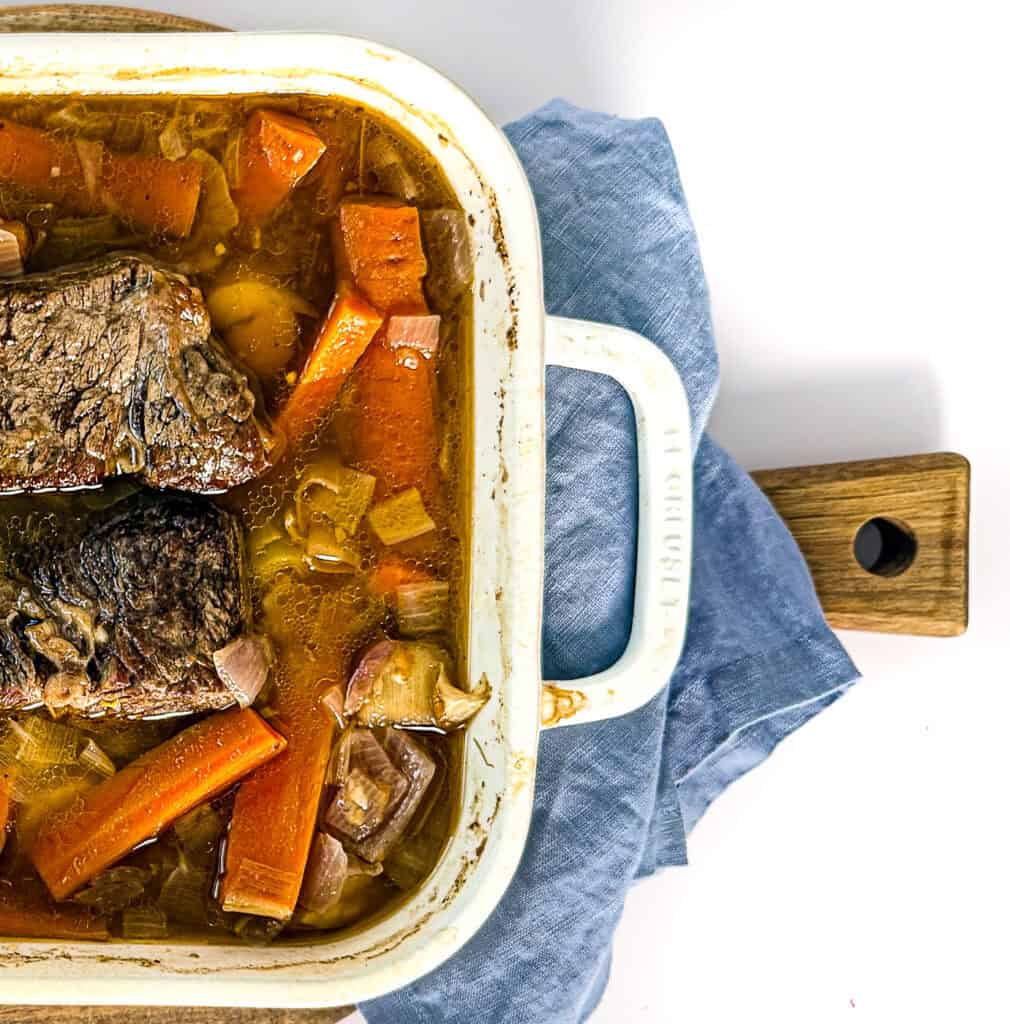
This pot roast with carrots and onions is one of those rare meals that actually improves after a night in the fridge. The flavors settle in, the broth gets a little richer, and the vegetables turn soft and sweet in a way that feels like a small reward for planning ahead. It’s the kind of make-ahead dinner I lean on during busy weeks, low-energy days, or those unpredictable GLP-1 appetite swings when nothing else sounds good.
- One of the best things about braised dishes is that they look after themselves. The broth keeps everything tender and moist, so you don’t have to worry about dry beef or sad, mushy vegetables.
- You get a few meals out of one pot, and there’s barely any extra effort involved. I like to portion leftovers into small containers with plenty of broth, so each serving tastes just as good as the first.
- Reheating is easy, on the stovetop, in the microwave, or even in the oven if you’re feeling fancy. If you want it extra saucy, just add a splash of stock before warming it up.
- The beef is so tender and the vegetables so soft that on days when your appetite is missing or chewing feels like a chore, this meal goes down easily. I’ve had more than a few evenings where that’s exactly what I needed.
- You can spoon it over mashed potatoes, cauliflower mash, polenta, or just eat it straight from the bowl with plenty of broth and veggies. It’s forgiving and happy to work with whatever you’ve got in your kitchen.
If You’re On a GLP-1
If you’re on a GLP-1, this is one of those recipes you’ll want to keep in your back pocket. Slow-braised beef is the kind of protein that actually feels satisfying, even when you’re eating less. The carrots and onions add just enough sweetness and fiber to make it feel like a real meal, no extra effort, just honest, nourishing food that shows up when you need it. honest, nourishing food that does its job.
My Favorite Pairing Suggestions
You can use homemade chicken broth instead of beef broth for a richer taste. And, if you’re looking for a great low calorie high protein side, try my flatbread and tzatziki.Take the potatoes out of the dish and make mashed potatoes using the baking liquid instead of fattening gravy. Or add a simple green salad with fresh black pepper and a squeeze of lemon.
Why You’ll Love this Tender Pot Roast
- Meal preps well; 1 pound yields 4 meals.
- Preps in 15 minutes and basically cooks itself.
- 23 grams of protein per serving.
- One baking dish, no special equipment.
Ingredients Notes & Smart Swaps
What Goes In and Why It Works
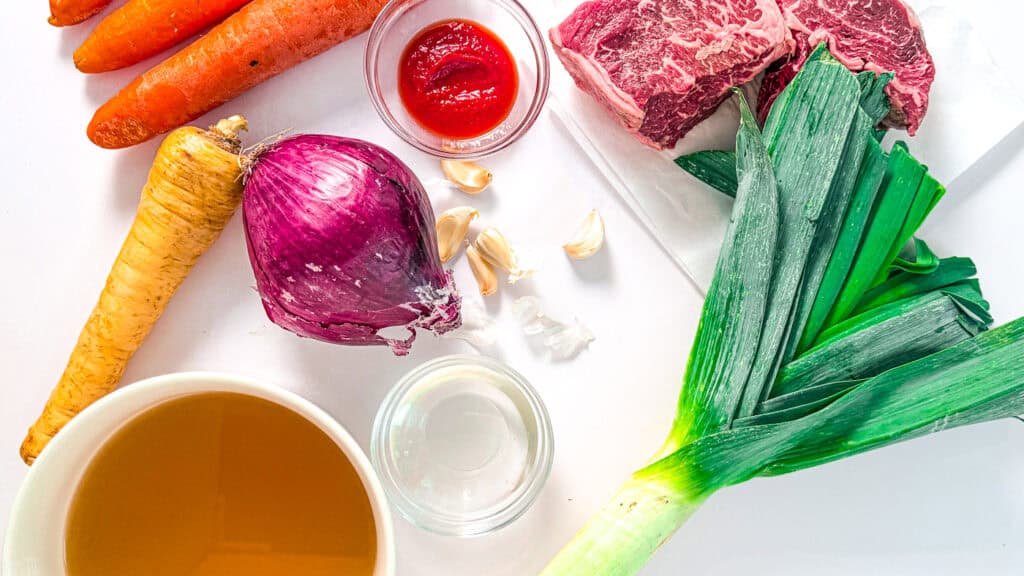
- Chuck Roast: My go-to for braising. Chuck roast is one of the best cuts for braising thanks to its marbling and connective tissue, which melt into tenderness over low heat. After a few hours, it turns silky and tender, and the broth thickens all on its own. If you want a pot roast that feels like a reward for your patience, this is it.
- Extra Virgin Olive Oil: Essential for starting the pot roast, it browns the meat and builds a warm base for the recipe.
- Red Onion: In pot roast, red onions melt away into the braising liquid, leaving gentle sweetness and color. They’re the subtle hero that gives your pot roast broth a richer, layered taste with little extra effort.
- Flour: A light dusting is essential for browning pot roast meat and giving the sauce its irresistible, spoon-coating finish, just what every pot roast needs.
- Tomato Puree: This balances the deep flavors found in a pot roast, lending zing, color, and depth to the whole dish.
- Carrots: These are the cheerful, sweet notes in the mix. They soften and soak up all the flavor, making every bite feel a little like comfort food.
- Parsnip: If you’ve never tried parsnip in a braise, you’re in for a treat. It brings a gentle, earthy sweetness and a hint of something herbal, making the broth taste like you’ve been cooking all day.
- Leek: Leeks quietly melt into a pot roast broth, adding a mellow flavor and extra silkiness, always in the background but making the dish special.
- Garlic: A few cloves transform into a pot roast, turning sweet and buttery after a slow cook and adding a deep, cozy aroma to the entire dish.
- Chicken Broth: I use chicken broth in pot roast for a light, bright touch. It allows the other flavors to shine and provides Mediterranean vibrance to the usual pot roast.
- White Wine: For pot roast, a splash of white wine adds brightness and helps lift the browned bits, giving the dish even more depth.
Substitutions for the Pot Roast with Carrots and Onions
- Chuck Roast: Can’t find it? No problem. Stew meat, short ribs, or brisket all work beautifully here. Use what your store has, or whatever looks good on sale.
- Extra Virgin Olive Oil: Avocado oil, light olive oil, or ghee are all solid swaps.
- Red Onion: Yellow onion for a touch more sweetness, white onion for a cleaner and sharper flavor, or shallots for something more delicate.
- Flour: Use half the amount of cornstarch, arrowroot powder for a glossier finish, or skip it entirely if you prefer.
- Tomato Puree: Tomato paste works well (use half the amount with a splash of water), crushed tomatoes for more texture, or sun-dried tomatoes for a deeper, more concentrated flavor.
- Carrots: Sweet potatoes for a softer, sweeter bite; butternut squash for something silky and nutty; or turnips for an earthier, less-sweet result.
- Parsnip: Simply add more carrots, use celery root for a mild and creamy flavor, or try rutabaga for something earthy and nutritious.
- Leek: Green onions, extra onion, or shallots for a slightly sweeter taste.
- Garlic: Garlic powder (use 1/2 tsp per clove), roasted garlic for a mellower and sweeter flavor, or shallots in a pinch.
- Chicken Broth: Beef broth adds a richer, deeper flavor; vegetable broth keeps things lighter; or use water with a half bouillon cube.
- White Wine: Extra stock plus 1 tablespoon of lemon juice, dry vermouth, a teaspoon of apple cider vinegar, or a small splash of balsamic vinegar for added depth.
How to Make the Pot Roast with Carrots and Onions
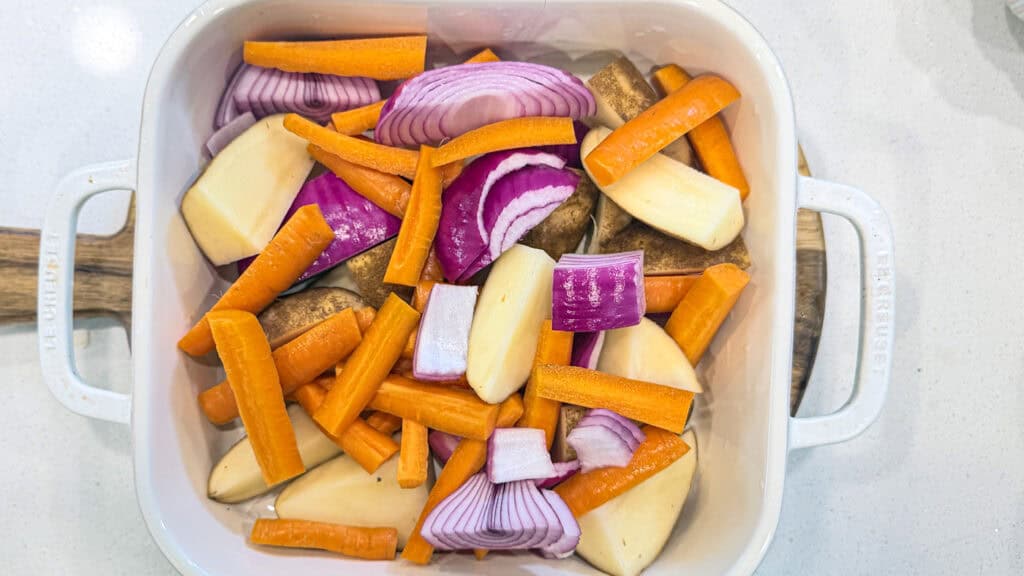
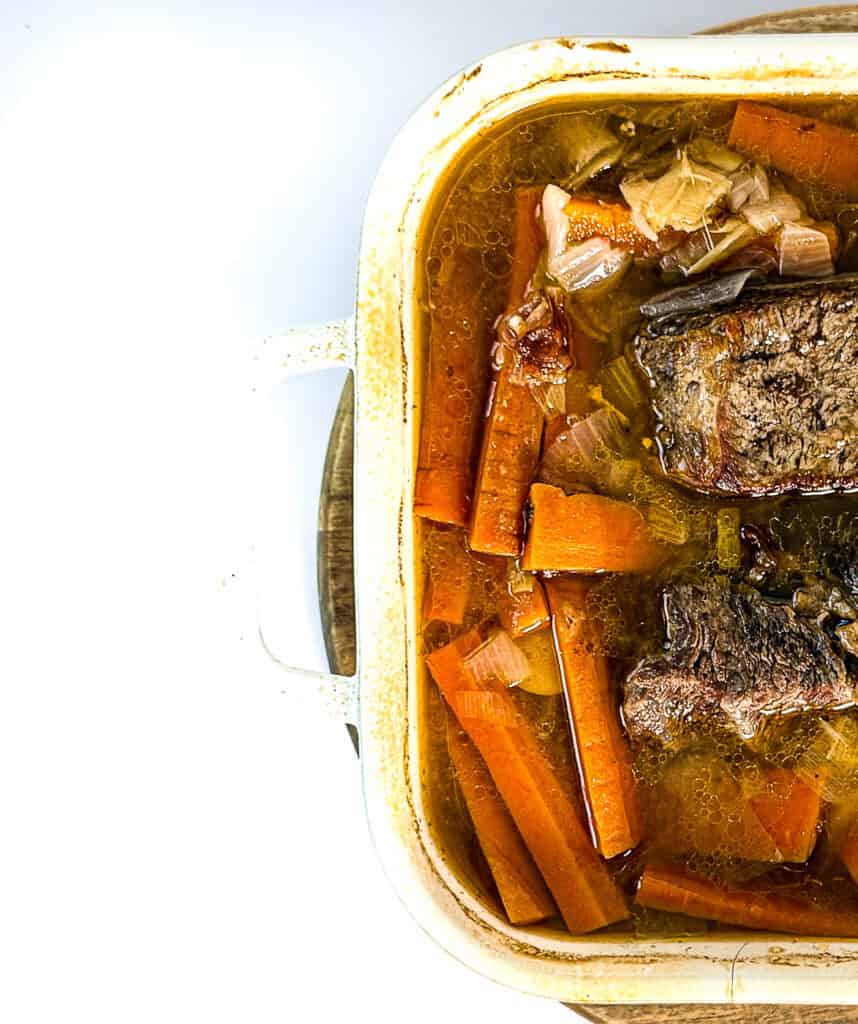
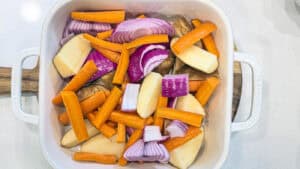
Quarter onion, cut carrots and potatoes into quarters and place in a baking dish.
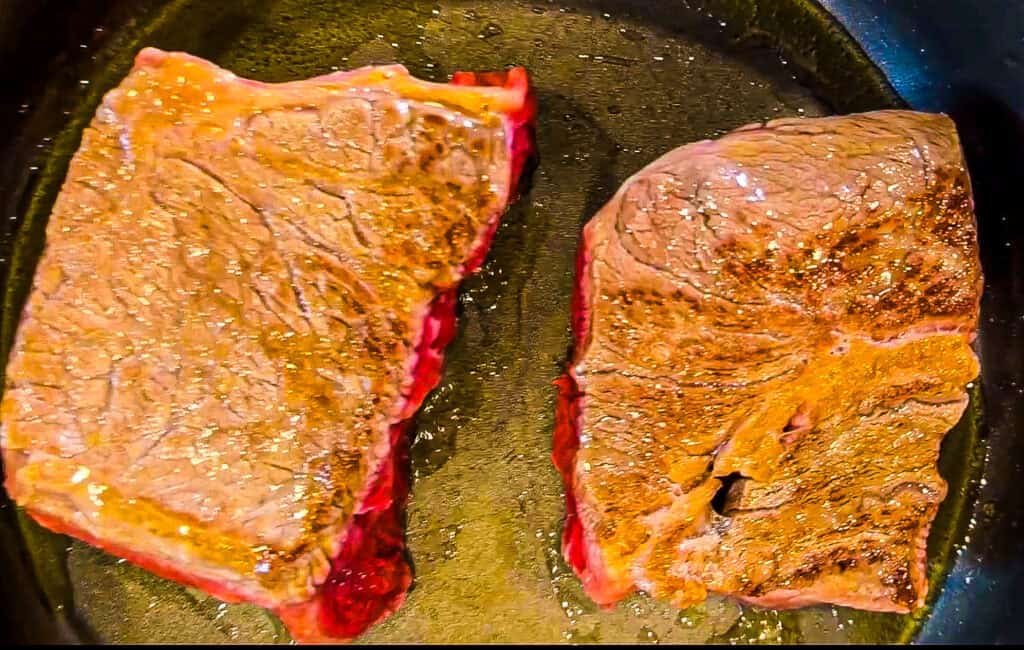
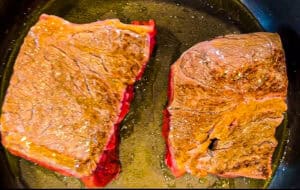
Preheat oven to 325°F (165°C). Lightly oil a deep baking dish. Pat the chuck roast dry. Rub with olive oil, salt, pepper, garlic powder, and smoked paprika. Heat a skillet over medium‑high and sear the roast 3–4 minutes per side until browned. Transfer to the baking dish.
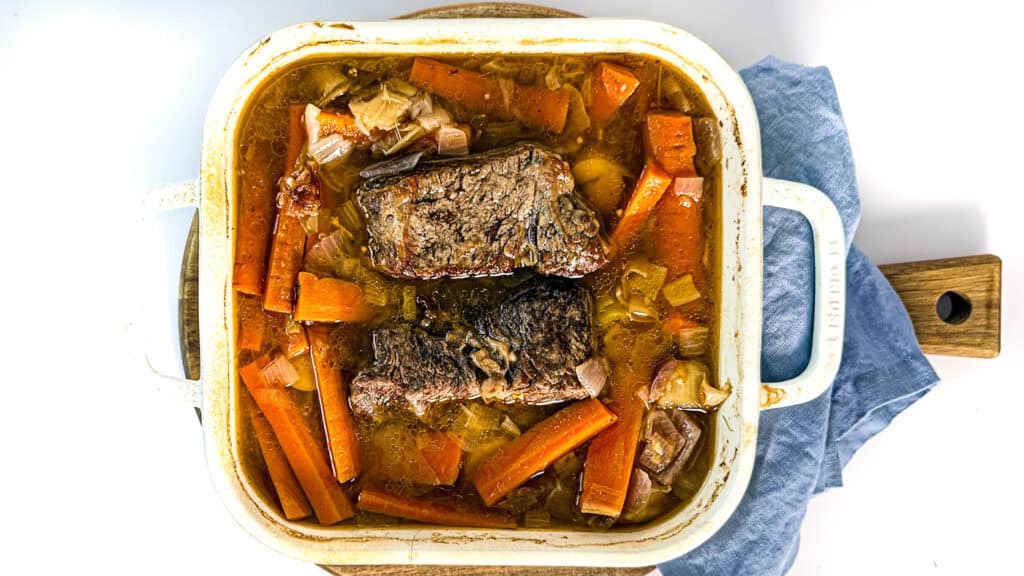
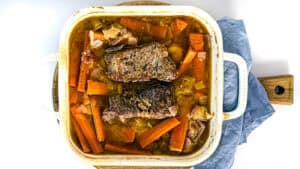
Pour broth and wine (or extra broth) into the dish. Add rosemary or thyme. Cover the baking dish with foil, sealing edges well to trap steam. Bake for 3 hours, or until the roast is fork‑tender and vegetables are soft.
Tender Pot Roast with Carrots and Onions
Equipment
- 1 Baking dish
Ingredients
- 3-4 pound chuck roast
- 2 tbsp olive oil
- 2 tsp salt
- 1 tsp black pepper
- 1 tsp garlic powder
- 1 tsp paprika
- 2 red onions quartered
- 4 carrots peeled & cut into large chunks
- 4 potatoes quartered
- 5 cloves garlic
- 1 cup beef broth
- 1/2 cup dry white wine
Instructions
- Preheat ovn to 325F. Lightly oil a deep baking dish. Pat the roast dry and rub with 2 tbsp olive oil, 2 tsp salt, 1 tsp black pepper, 1 tsp garlic powder, 1 tsp paprika. Heat a skillet over medium-high heat and sear the roast 3-4 minutes per side until browned.
- Scatter 2 red onions, 4 carrots, 4 potatoes, 5 cloves garlic, around the roast.
- Pour 1 cup beef broth, 1/2 cup dry white wine into the dish. Set roast on top. Cover the dish with foil. Bake for 3 hours or until the roast is fork-tender and vegetables are soft.
Notes
- Refrigerate fr 3-4 days.
- Freeze for 2-3 months and thaw in fridge.
- Preheat oven to 325F with 2-4 tablespoons broth. Cover with foil and heat 25 minutes.
Nutrition
Frequently Asked Questions
FAQ