Olive oil is one of those ingredients that shows up everywhere in Mediterranean cooking. But here’s the secret: olive oil has also been sneaking into desserts for just as long. Home bakers from Tuscany to Crete to Lebanon have always known that a splash of good extra virgin olive oil can turn a simple cake or cookie into something impossibly tender and rich, with a kind of moisture that butter just can’t pull off.
So, let’s talk about baking with olive oil. I’ll walk you through what happens when you swap out butter, why olive oil behaves the way it does in the oven, and which of those good-for-you bits (like polyphenols) stick around after baking. We’ll get into how olive oil might even help with satiety, especially if you’re on a GLP-1 journey. I’ll share the flavor pairings that make Mediterranean desserts so satisfying, and I’ll give you the real-life tips I wish I’d known sooner, like how to pick a bottle that won’t let you down, and how to store it so it stays fresh. No complicated recipes required. Just a little curiosity and maybe a spoon for taste-testing.
Whether you’re deep into the Mediterranean lifestyle, figuring out how to eat for metabolic health, navigating GLP-1 meds, or just looking for a dessert that tastes good and feels good, you’re in the right spot. Let’s jump in together.
What You’ll Find in this Article
The Ingredient Science: What Makes Olive Oil Work in Baking
Fat is the unsung hero of dessert. It brings moisture, tenderness, and structure; it wraps itself around the proteins in flour to keep gluten in check; it carries all those fat-soluble flavors we love; and it decides whether your bake turns out tender and moist or dense and chewy. The kind of fat you pick changes everything.
Extra virgin olive oil isn’t just a stand-in for butter; it completely changes what ‘moist’ means in a dessert. Because it’s pure fat with no water, it keeps crumbs soft and silky, and somehow your cake is still holding together days later, long after a butter cake would have given up and gone dry.
Butter in Baking
Butter is about 80% fat and 20% water. When you bake with it, that water turns to steam and escapes, which is why your beautiful butter cake tastes best straight from the oven and starts to get a little crumbly by day two. Olive oil, on the other hand, is 100% pure liquid fat. There’s no water to disappear. It coats the proteins in the flour evenly, keeps gluten in check, and creates a crumb that stays tender and moist for days. If you’ve ever found yourself sneaking a slice of olive oil cake on day two and thinking it’s even better than when it was fresh, now you know why.
Extra Virgin Olive Oil in Baking
EVOO is also rich in polyphenols, natural antioxidants such as oleocanthal, hydroxytyrosol, and oleuropein. Most home baking happens at 325 to 375 degrees, which is right in EVOO’s comfort zone. The best oils, with a free fatty acid content below 0.8%, are the most stable and loaded with polyphenols.
The Texture Difference
Here’s one thing to know about texture: since olive oil can’t trap air the way creamed butter does, your baked goods will turn out denser and fudgier. For a lot of desserts, think brownies, flourless chocolate cakes, or rustic tarts, that’s not a downside. That’s the whole point. That fudgy, satisfying bite is exactly what you’re after.
The Mediterranean Diet Connection
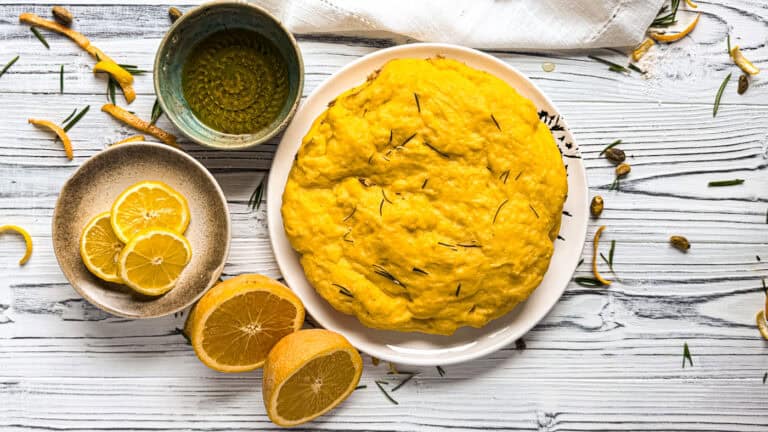
This isn’t some new food trend. Across the Mediterranean, baking with olive oil is just what people have always done. Italians have their torta all’olio, a simple, fragrant cake with a hint of citrus. Greeks make elaiokouloura, olive oil cookies with orange and sesame. In Spain, there’s pastel de aceite, a delicate pastry rich with EVOO. And in the Middle East, ma’amoul, those date- and nut-filled semolina cookies, have been made with olive oil for generations. What’s new to some kitchens is old wisdom elsewhere.
The GLP-1 Lens
(I’m not a medical professional. This reflects my personal experience. Always check with your doctor.)
Here’s something that surprised me: that drizzle of extra-virgin olive oil on your dessert is doing more than just making things taste good. It’s actually talking to your gut hormones. Using EVOO in desserts isn’t settling; it’s a smart move. You’re making sweets that work with your body’s fullness signals instead of against them.
GLP-1 Hormone
GLP-1 is a hormone naturally produced in your gut after eating. It signals fullness to your brain, slows the rate at which food leaves your stomach (gastric emptying), and stimulates the release of insulin in response to rising blood sugar. In short, GLP-1 is your body’s built-in “I’ve had enough, and everything is metabolically ‘under control’ signal. GLP-1 receptor agonist medications like Ozempic and Wegovy have become widely discussed because they mimic this hormone. What’s fascinating is that your diet can naturally influence how much GLP-1 your body produces on its own.
Olive Oil Clinical Studies
Several clinical studies have shown that extra virgin olive oil can boost your body’s own GLP-1 and PYY, two hormones that help you feel full, while also lowering ghrelin, the hormone that makes you hungry. So a dessert made with EVOO isn’t just a treat; it’s working with your body’s natural fullness signals, not against them.
Compounds like hydroxytyrosol, oleocanthal, oleuropein, and elenolic acid interact with your gut and help promote fullness and balance. The polyphenol content can vary widely, so choosing a good olive oil really does matter.
This places EVOO squarely at the heart of the Mediterranean diet, which remains the gold standard for metabolic health in evidence-based nutrition research. A 2025 joint advisory for the American College of Lifestyle Medicine and the American Society for Nutrition highlighted nutritional interventions.
Olive Oil Compounds Affect Gut Receptors
Hydroxytyrosol, oleocanthal, oleuropein, and elenolic acid interact with gut receptors and signaling pathways to promote fullness and metabolic balance. Polyphenol content varies enormously across olive oils, so quality matters.
This places EVOO squarely at the heart of the Mediterranean diet, which remains the gold standard for metabolic health in evidence-based nutrition research. A 2025 joint advisory from the
American College of Lifestyle Medicine and the American Society for Nutrition highlighted nutritional interventions, including the Mediterranean diet, as essential complements to GLP-1 therapy. Whether you are on a GLP-1 medication or simply eating for metabolic health, using EVOO in your baking is aligned with the best available science.Lifestyle Medicine and the American Society for Nutrition highlighted nutritional interventions, including the Mediterranean diet, as essential complements to GLP-1 therapy outcomes. Whether you are on a GLP-1 medication or simply eating for metabolic health, using EVOO in your baking is aligned with the best available science.
Flavor Pairings: The Flavors That Love Olive Oil
One of the best surprises about baking with EVOO is discovering just how generously it plays with other flavors. Butter is like the quiet friend who lets everyone else shine, but extra-virgin olive oil brings its own personality to the party. Matching that character to the right ingredients is the secret to Mediterranean desserts that really sing. Think of this as your flavor map.
The first thing to understand is that not all EVOO tastes the same. Intensity, from mild and buttery to robust and peppery, varies by olive variety, harvest time, and terroir. Matching the intensity of your oil to the intensity of your dessert is the single most important flavor decision you’ll make.
Here’s a simple way to get to know your oil: pour a teaspoon of EVOO into a small cup and sip it plain (just like wine). Let it settle on your tongue. A mild oil will taste smooth, gently fruity, and might have a buttery or nutty finish. If it’s medium, you might notice hints of grass, apple, or even tomato, with a soft peppery feeling at the back of your throat. Robust oils will be bold and grassy or peppery, sometimes even tingly. Try tasting with a piece of plain bread if you prefer. Once you know where your oil falls on this spectrum, you’ll be able to confidently match it: milder oils for delicate desserts, robust oils for chocolate or bold flavors, and medium oils for almost any recipe in between.
Mild & Buttery EVOO
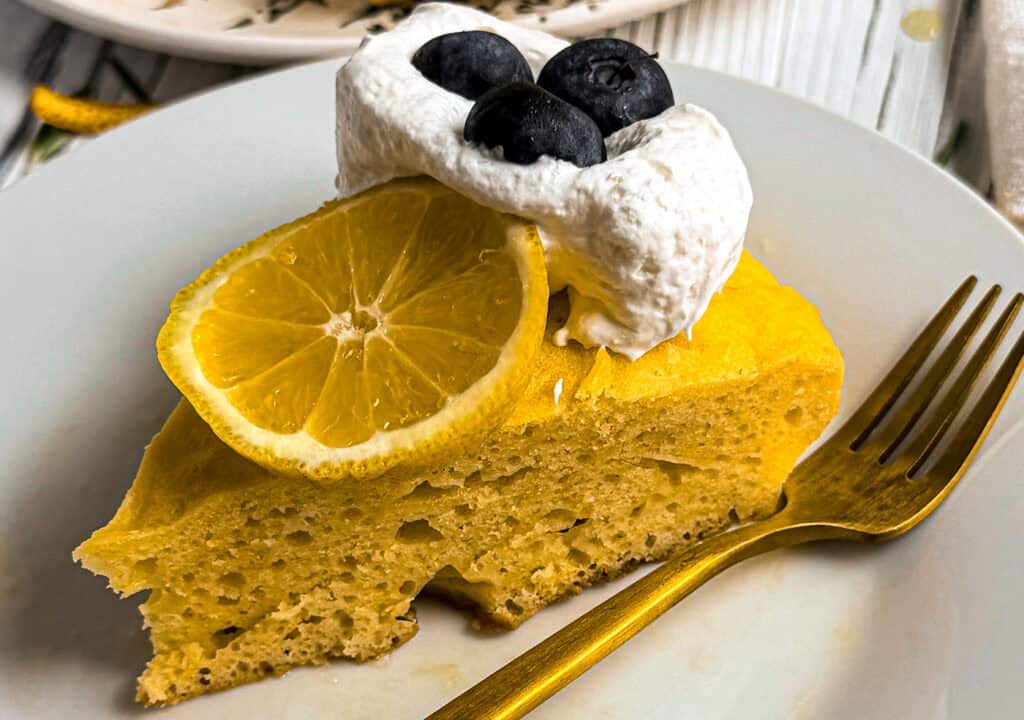
Mild, buttery EVOOs are harvested from fully ripe olives and carry a gentle flavor that lets other ingredients shine. They are your best choice when you want the moisture and health benefits of olive oil without a pronounced olive flavor. These pair beautifully with:
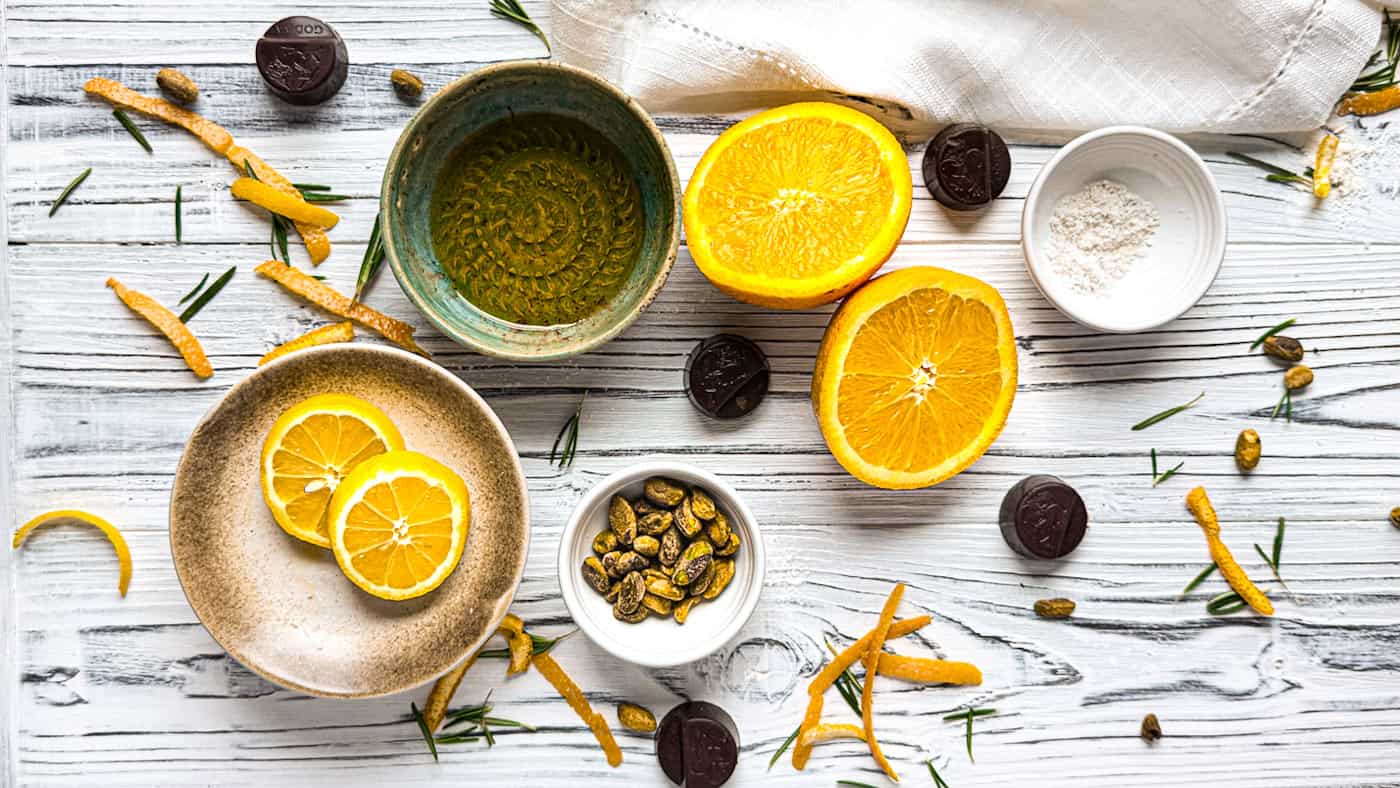
- Citrus: lemon, orange, and yuzu zest; lemon glaze; candied orange peel
- Vanilla and honey: classic, soft, floral sweetness
- Almond and stone fruits: peaches, apricots, cherries
- Delicate textures: panna cotta, shortbread, tea cakes, citrus loaf cakes
Picture a light lemon-almond polenta cake drizzled with wildflower honey, or a silky citrus panna cotta with just a touch of mild EVOO in the base. The oil melts into the background, adding a richness you can feel but can’t quite put your finger on.
The oil melts into the background, adding richness you can feel but can’t quite name.
Medium & Fruity EVOO
Medium-intensity oils are the workhorses of the Mediterranean dessert kitchen. They carry a pleasant fruitiness; notes of fresh-cut grass, green apple, or ripe tomato, with a gentle peppery finish. These are versatile enough for most Mediterranean-style desserts:
- Dark berries: blueberries, blackberries, raspberry
- Cardamom, cinnamon, and warm spices
- Pistachio and fig: a classically Mediterranean combination
- Dates and honey-based desserts
- Semifreddo, almond cakes, and walnut-based pastries
A medium EVOO is your go-to for an almond-pistachio honey cake, a fig-and-cardamom tart, or a date-walnut loaf that just begs to be eaten with an afternoon coffee.
Robust & Peppery EVOO
Robust EVOOs, usually made from early-harvest, slightly underripe olives, are peppery, bold, and a little bit wild. They have the highest concentrations of polyphenols and the most pronounced flavor, which is exactly what you want when you’re pairing with equally bold ingredients. These are the oils for your olive oil chocolate cake:
- Dark chocolate (70%+): the pairing of the century
- Sea salt: a finishing touch that makes chocolate flavors pop
- Espresso and coffee
- Blood orange and walnut
- Dense brownies, ganache tarts, and flourless chocolate cakes
Infused and Flavored EVOOs
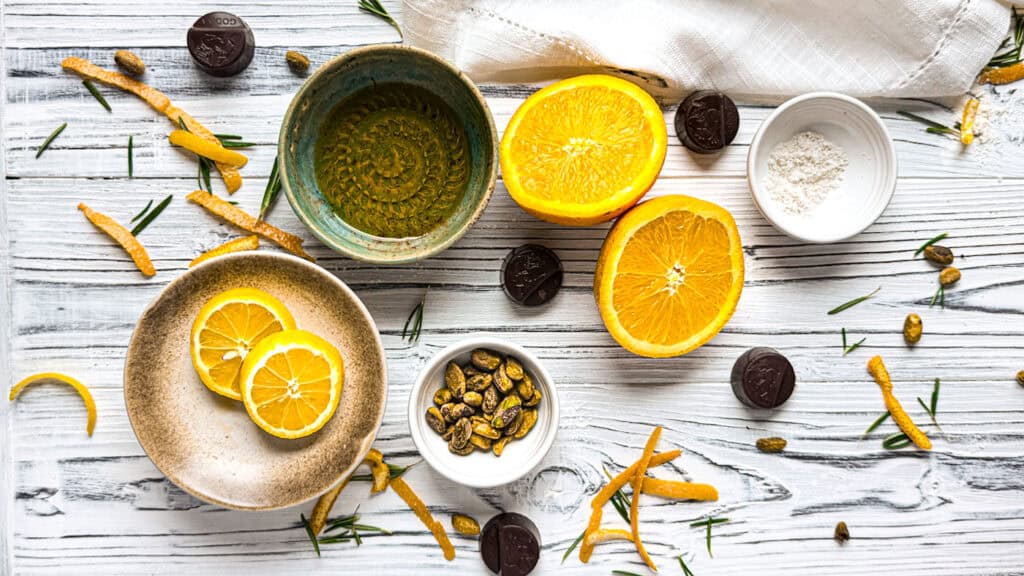
Lemon, blood orange, rosemary, and even vanilla are brilliant shortcuts for home bakers. A lemon-infused EVOO in a simple almond cake adds citrus complexity without any zesting. A blood-orange EVOO in a chocolate brownie creates that Jaffa-cake magic without any extra effort. Look for high-quality infused oils where the flavor is introduced during crushing, not just added in later.
It’s worth saying: this flavor philosophy isn’t trendy, it’s traditional. Across the Mediterranean, these combinations have shown up on dessert tables for centuries because they just work. You’re not experimenting, you’re carrying on a delicious tradition.
How to Choose the Right Olive Oil for Your Desserts
Not all olive oils are created equal, and for desserts, this matters even more than it does in savory cooking. In a pasta sauce, strong flavors can hide a mediocre oil. But in a simple citrus cake, where olive oil is the main fat and flavor, quality is everything. Here’s how to shop smart.
What to Look For on the Label
- Harvest Date: Look for a harvest date within the last 18 months. This is more meaningful than a “best by” date, which can be set arbitrarily far in the future.
- “Extra Virgin” Designation: This means the oil was mechanically extracted without heat or chemical solvents, preserving its polyphenols, flavor compounds, and antioxidants.
- ”Cold Pressed” or “First Cold Pressed”: Confirms low-temperature processing that protects the oil’s bioactive compounds.
- DOP, PDO, or IGP Certification: European quality designations that guarantee origin and production standards.
- Dark or Opaque Glass Bottle: Light is one of olive oil’s greatest enemies. Dark glass protects the oil’s polyphenols and flavor from light degradation.
- FFA Level Below 0.8%: Free fatty acid content is a key indicator of freshness and quality. The lower, the better.
What to Avoid
- “Light” or “Pure” Olive Oil: These are refined oils that have been processed with heat and chemical solvents. They have been stripped of all polyphenols, antioxidants, and flavor. They are not the right tool for EVOO desserts.
- Clear Glass or Plastic Bottles: If light can get in, quality is getting out. Avoid these regardless of how appealing the label looks.
- No Harvest Date on the Label: This often signals an older, potentially oxidized oil. If the producer is proud of their oil’s freshness, they will tell you when it was harvested.
- Bargain Blends: Very inexpensive “olive oils” are frequently cut with lower-quality seed oils. For savory cooking, this is a problem. For baking, it defeats the purpose entirely.
How Much Olive Oil to Use in Desserts
One of the most common questions about baking with olive oil is: How do I convert my existing recipes? The good news is that the math is simple and the results are almost always excellent.
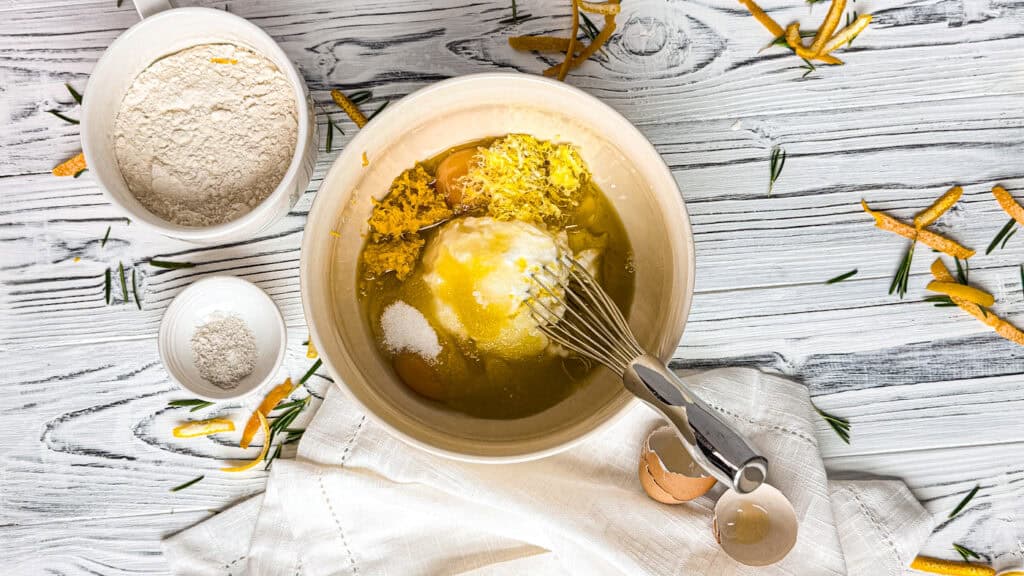
- Replacing butter with EVOO: Use 3/4 cup of EVOO for every 1 cup of butter called for in a recipe. Since EVOO is 100% fat and butter is roughly 80% fat plus 20% water, this ratio accounts for the moisture difference.
- Replacing neutral oil (e.g., vegetable or canola): Use a 1:1 swap. This is the easiest substitution and works in virtually every recipe.
- Adjusting other liquids: If a recipe already has a significant amount of liquid, you may want to reduce it slightly when switching from butter to EVOO, since you’re no longer adding the water butter contributes.
- Watch your bake time: Olive oil desserts can brown faster than their butter-based equivalents. Start checking for doneness 5–8 minutes earlier than the recipe suggests.
New to EVOO Baking?
If you’re new to baking with olive oil, try a half-and-half approach first: swap in EVOO for half the fat in your recipe and keep the other half as butter. You’ll get the extra moisture and health benefits of EVOO, but the flavor will still feel familiar. Most desserts made this way taste just like the original, so you’ll notice the texture before you ever notice a flavor change. If you want a little extra peace of mind, start with a small batch to see how you like it and build your confidence. Once you’re comfortable, you’ll probably find yourself going all-in on EVOO—and wondering why you waited.
Storing Olive Oil for Baking
You’ve invested in a beautiful bottle of high-quality EVOO, so let’s make sure it stays that way. The enemies of olive oil are light, heat, and air. Keeping these three in check will help your oil taste vibrant and full of all those good-for-you polyphenols from the first pour to the last.
- Optimal storage location: A cool, dark pantry shelf, ideally at 57–65°F. Critically, this means away from your stove and oven, where ambient heat degrades oil even through a closed bottle.
- Shelf life from harvest date: 18–24 months unopened. The harvest date on the label tells you everything.
- Once opened: Use within 6–8 weeks for the best flavor and polyphenol content. Oxygen begins degrading the oil from the moment you first open it.
- Never refrigerate olive oil. Cold temperatures cause EVOO to become cloudy and solidify. While this is not harmful, it can accelerate flavor decline and make the oil difficult to use. If your oil clouds in cold weather, let it return to room temperature before using.
- Signs of rancidity: Rancid olive oil smells musty, waxy (like crayons), or flat, with no pleasant peppery or grassy finish. If your oil smells like this, it’s time for a fresh bottle.
- Buy the right size: If you bake occasionally rather than every day, go for a smaller bottle (250ml or 500ml), so you actually use it up while it’s still at its best. Freshness is the single biggest sign of quality in any bottle of EVOO.
The Bottom Line
Here’s what thousands of years of Mediterranean baking have known and what nutrition science is now confirming: choosing extra virgin olive oil in desserts is not a health-food sacrifice. It is not a compromise. It is a genuine upgrade in flavor, in texture, in nutritional intelligence, and in the longevity of your baked goods.
The cakes are moister. The brownies are fudgier. The cookies stay soft longer. The polyphenols support your satiety hormones. And the flavor? When you pair a quality EVOO with dark chocolate, citrus, almonds, honey, or figs, you taste something that feels ancient and entirely right, because it is. Millions of people across Greece, Italy, Spain, Lebanon, and beyond have been eating desserts this way for centuries: with pleasure, intention, and ingredients that love the body back.
Ready to bring these principles into your own kitchen? Try my Greek Yogurt Olive Oil Cake recipe, or if you’d like to try olive oil in a no-bake dessert, try my lemon olive oil mousse; it’s amazing!. And, if you want to go deeper, take a look at my Mediterranean lifestyle guide. It’s a great place to start!
Frequently Asked Questions