Fresh basil is my not-so-secret weapon in Mediterranean cooking. It’s one of those ingredients that somehow makes even the simplest, healthiest meals taste like you’ve pulled off something fancy, without actually trying that hard.
If you’ve ever watched a bunch of basil wilt into a sad, black mess in your fridge (been there), or you’re just hoping to make a pesto that actually keeps you full, you’re in the right place. Here’s everything I wish I’d known about keeping basil happy and making the most of every leaf.
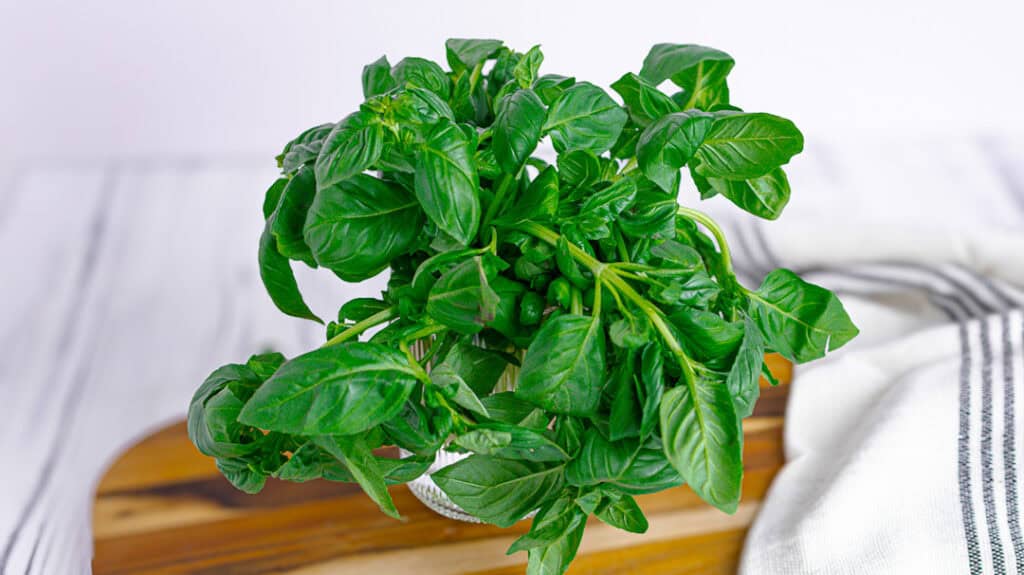
How to Keep Fresh Basil Alive (and Avoid Black Leaves)
KEY TAKEAWAY
Store fresh basil at room temperature on your kitchen counter like cut flowers; never in the refrigerator. Cold temperatures below 50F (10C) cause chilling damage, turning leaves black within hours. Trim the stems, place the bunch in a jar with 1 inch of water, and cover loosely with a plastic bag. It will stay fresh for up to two weeks.
The Room-Temperature Jar Method (Why Cold Kills Basil)
Basil is a bit of a diva compared to rosemary or thyme. It’s a tropical plant, so the fridge is basically its worst nightmare. Stick it in there, and you’ll end up with limp, sad leaves before you know it.
To Store Basil Properly:
- Snip the bottom quarter-inch off the stems.
- Place the stems in a small glass jar with 1-2 inches of water (do not let leaves submerge).
- Cover the top of the leaves loosely with a plastic grocery bag or thin produce bag to top humidity.
- Leave it on your counter away from direct sunlight.
Freezing Fresh Basil: Whole Leaves vs Herb Oil Cubes
If you’ve ever come home from the farmers market with way more basil than you know what to do with (guilty), freezing is your best bet for keeping that fresh, sweet smell alive. Drying just doesn’t do it justice. Frozen basil keeps its flavor and color best for up to 6 months, so you can have a taste of summer on hand for meal prep all year long.
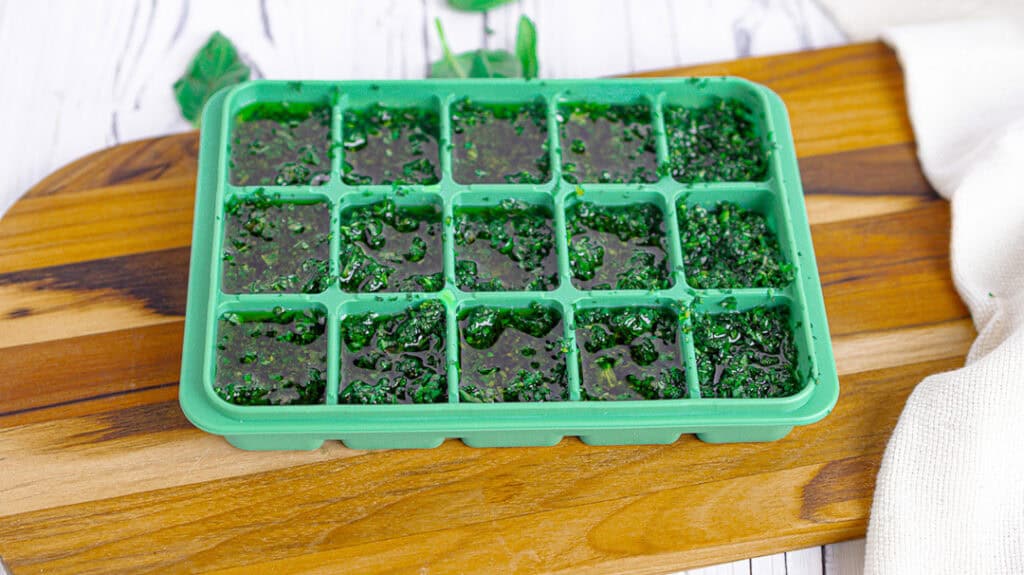
The Oil-Cube Method (Best for Cooking): Once solid, pop the cubes into a freezer bag. toss a cube directly into warm soups, sauces, or skillet dishes.
- Wash and dry fresh basil leaves.
- Place leaves in food processor and pulse to finely chop.
- Pack about 1-2 tablespoons of chopped basil into each compartment of a silicone ice cube tray.
- Pour extra virgin olive oil over the basil until the leaves are submerged.
- Freeze for at least 3-4 hours, until frozen solid.
- Once frozen, transfer basil cubes to a labeled airtight freezer bag. Store in freezer up to 6 months.
The Blanch & Freeze Method (Best for Sauces): Dunk whole leaves in boiling water for 3 seconds, submerge immediately in ice water, pat completely dry, and lay flat on parchment paper to freeze before transferring to a bag. This locks in the vibrant green color.
Preventing Oxidation When Blending Sauces
There’s nothing quite as disappointing as watching your gorgeous green pesto turn into a sad, brown mess. Turns out, blending heats things up and lets in too much air, which is basically an invitation for growing enzymes to do their thing.
The fix
Add a splash of lemon juice and use cold olive oil when you blend. If you’re making a big batch, give the leaves a quick three-second dip in boiling water first. it’s a tiny step that makes all the difference.
Basil Conversions, Varieties, & Swaps
Quick Answer: Use 1 tablespoon of fresh chopped basil for every 1 teaspoon of dried basil (a 3:1 ratio). Dried herbs are far more concentrated, so use less when cooking warm dishes, and stick to fresh for raw dishes.
Fresh vs Dried Basil Ratio
- The standard ratio is 3 parts fresh for every 1 part dried.
- Use 1 tsp fresh (chopped) for every 1/3 tsp dried.
- 1 tbsp fresh (chopped) for every 1 tsp dried.
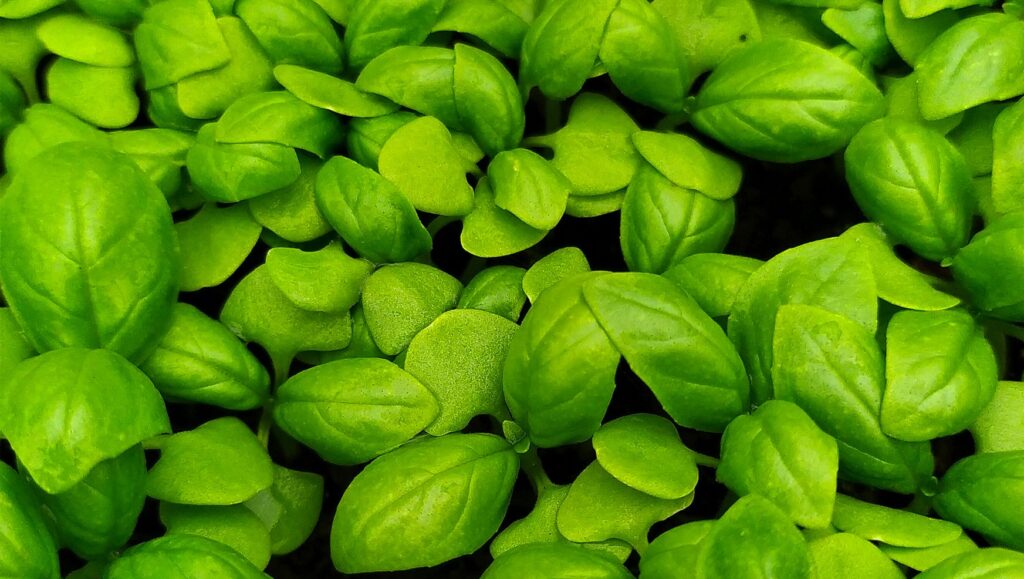
Genovese Basil
- Flavor: Sweet, peppery, with strong notes of clove and anise.
- Appearance: Medium-green, smooth, cupped (curved downward) leaves.
- Texture: Soft, tender, easily bruised.
Best Uses: Authentic pesto, Caprese salads, raw garnishes, finishing warm tomato sauces. - Peak Season: June though September.
- Culinary Profile: The gold standard for Italian and Mediterranean cooking. It features rounded, tender leaves with an anise and clove-tinged sweet aroma, adding a bold and complex herbal note. This variety brings bright, classic basil flavor to dishes, making it perfect for pesto and Caprese salads where you want basil to shine.
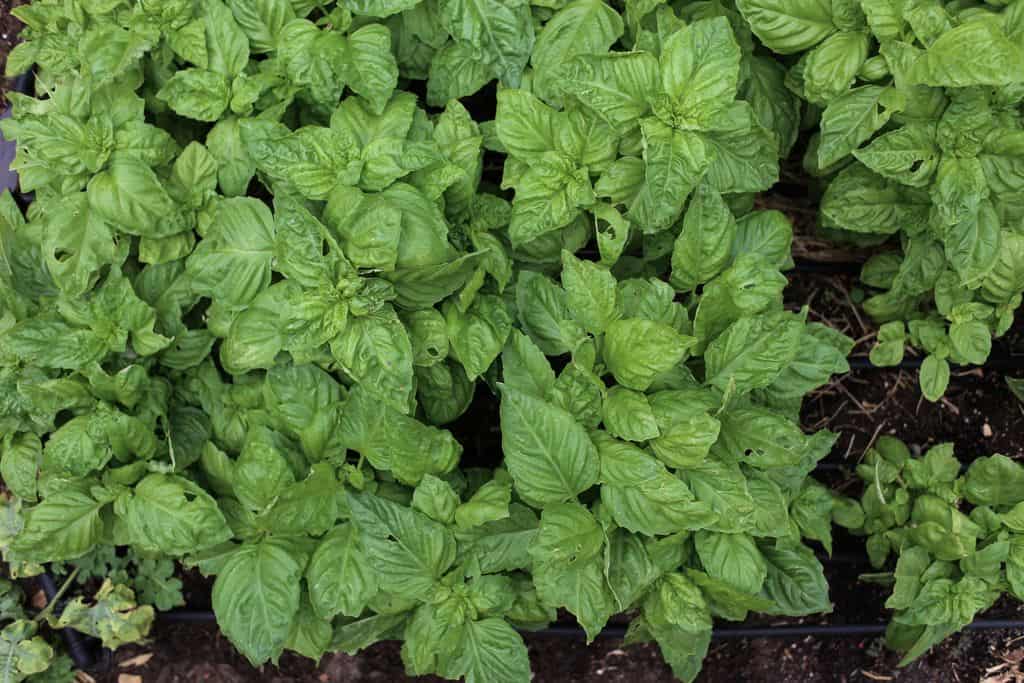
Sweet Basil
- Flavor: Milder than Genovese, slightly herbaceous and citrusy.
- Appearance: Broad, flat, bright green leaves.
- Texture: Slightly sturdier than Genovese.
- Best Uses: Long-simmering marinara, vegetable soups, infused oils, everyday cooking.
- Peak Season: June through September (although peak flavor occurs in July and August).
- Culinary Profile: This is the most common variety found in grocery stores. it’s slightly more forgiving of heat than Genovese, making it a great workhorse herb for cooked Mediterranean dishes.
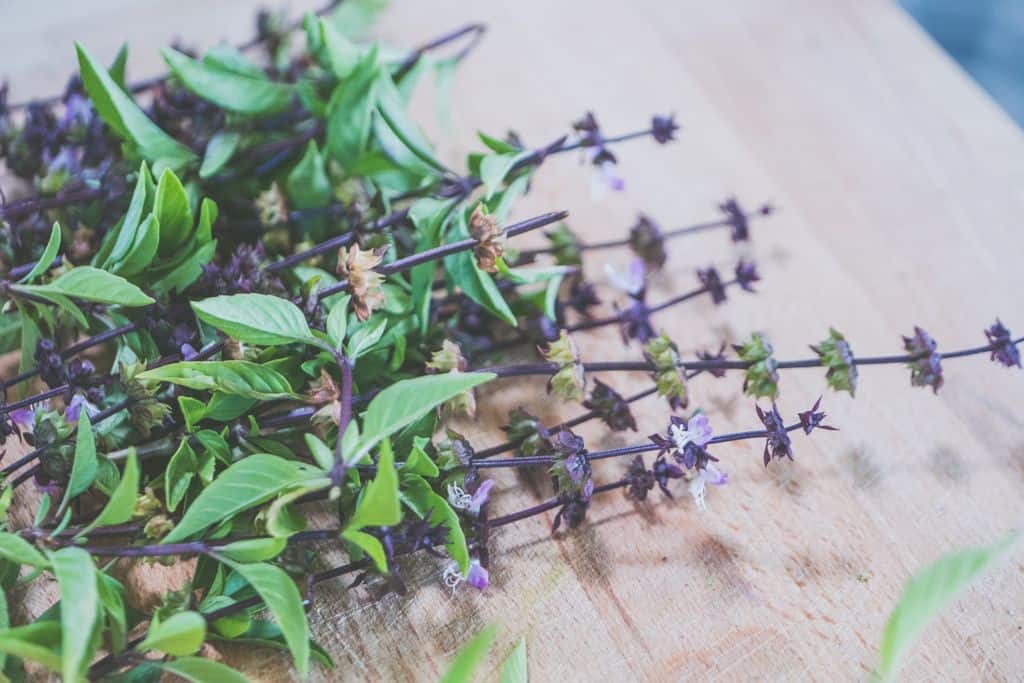
Thai Basil
- Flavor: Pungent, licorice-like, spicy, and distinctly sweet.
- Appearance: Narrow, sweated green leaves with striking purple stems and flowers.
- Texture: Stiff, crisp, holds up to high heat.
- Best Uses: Southeast Asian curries, stir-fries, noodle soups like Pho.
- Peak Season: June through September
- Culinary Profile: Unlike Mediterranean basils, Thai basil thrives in heat and maintains its texture and aroma even when cooked in boiling broth or hot oil. Avoid using in Italian dishes, as the strong licorice notes clash with classic Mediterranean flavor profiles.
Best Mediterranean Substitutes in a Pinch
If you find yourself halfway through a recipe and realize you’re out of basil (it happens to the best of us), here are a few swaps that can save dinner.
- Fresh Mint + Italian Parsley (50/50 Mix): Captures both the aromatic sweetness and bright herbal green flavor needed in fresh salads.
- Fresh Oregano or Marjoram: Works well in warm tomato-based dishes, though use slightly less as oregano is more pungent.
- Fresh Baby Spinach (for Pesto): Gives pesto its brilliant green color and texture, though you’ll want to add garlic and lemon juice to compensate for the lost basil flavor.
Quick Ideas for Leftover Basil
- If you have extra basil on hand, there are countless ways to use it p so not a leaf goes to waste.
- Tear a few leaves over omelets or scrambled eggs for a fresh herbal boost.
- Toss whole or chopped basil into green salads, grain bowls, or atop avocado toast.
- Stir into soup right before serving for extra brightness.
- Throw into a pitcher of water, lemonade, or iced tea.
- Add to summer fruit like sliced strawberries or peaches for a sweet-savory twist.
How to Cook With Fresh Basil: 3 Golden Culinary Rules
Fresh basil isn’t just a garnish; it’s an active flavor builder. Because its aromatic oils are so delicate, treating it like a standard cooking herb (like rosemary or thyme) will destroy its sweet, peppery signature.
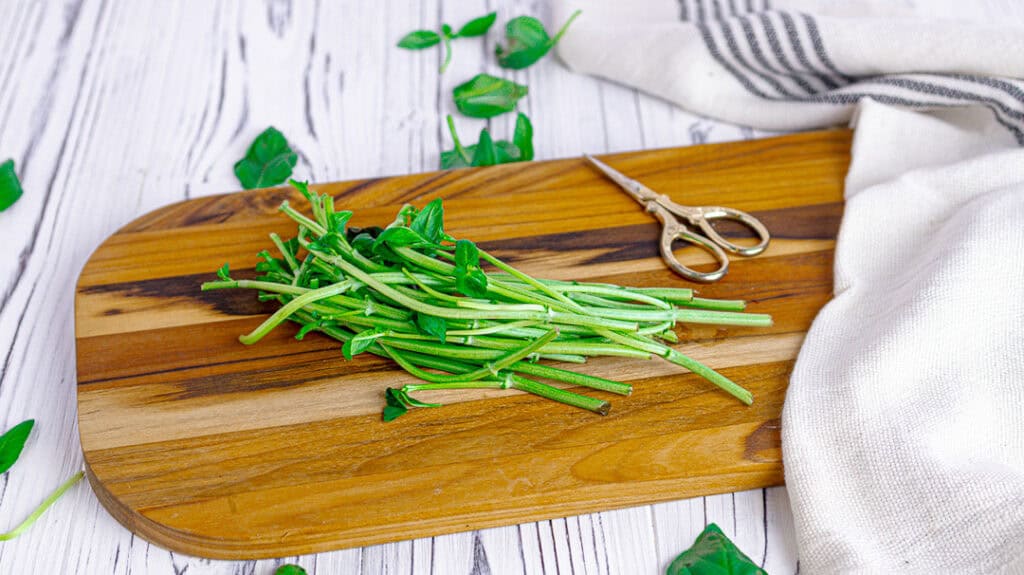
Rule 1: Always Add Fresh Leaves at the Very End
Heat is the enemy of fresh basil. Cooking basil leaves for more than 60 to 90 seconds beaks down the delicate essential oils, turning bright green leaves into dull, flavorless brown mush.
- The Technique: Stir fresh chopped or torn basil into soups marinara, or warm pasta after you turn off the heat. The residual heat is just enough to release the fragrance without cooking out the flavor.
- Pro Tip: Don’t waste the stems. While leaves should be added late, basil stems contain deep savory flavor Tie cleaned steam together with twine and let them simmer early in tomato sauces or broths, then discard before serving.
Rule 2: Tear or “Chiffonade” (Don’t Chop Repeatedly)
Chopping your basil repeatedly with a dull knife crushes the plant cells against your cutting board and bruise the herb. This leaves half your flavor and green color behind on the wood.
- Tearing: for rustic salads, Caprese, or white bean dishes, gently tear leaves by hand.
- Chiffonade (Thin Ribbons): Stack 5-6 leaves on top of one another, roll them tightly like a cigar, and make thin, single cuts across the roll with a very sharp knife.
Rule 3: Balance Fat & Acid for High Satiety Flavor
When eating for satiety and metabolic health, high-impact herbs allow you to skip added sugars. basil naturally contains sweet, anise-like notes that balance acidity in tomatoes and citrus, while its fat-soluble aromatic compounds bloom when paired with high-quality extra virgin olive oil.
Fresh Basil Recipe Ideas (High-Protein & Mediterranean)
Whether you have a giant bunch from the farmers market or an overflowing garden plant, here are the best ways to bring fresh basil to your table.
High Protein Spreads & Sauces
Blending basil with healthy fats or cultured dairy treats rich, nutrient-dense dips that make lean proteins and raw vegetables feel decadent.
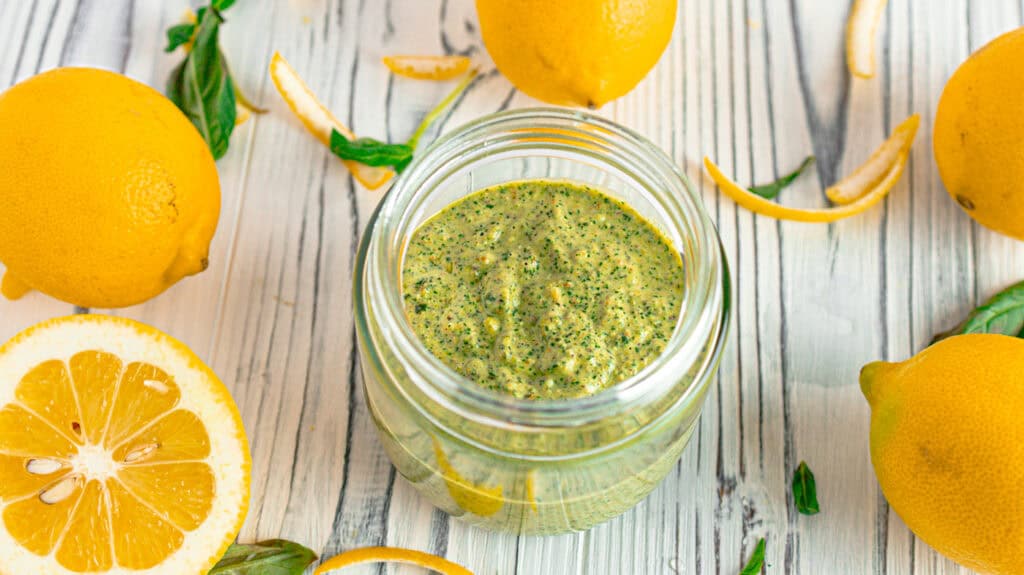
Pesto
Classic pesto is delicious, but between the pine nuts and parmesan, it can be a bit much if you’re watching calories. Luckily, a few easy swaps can turn pesto into a filling, protein-packed spread you’ll actually feel good about. Try my Healthy Pistachio Pesto; a high-protein, lower-fat spin on traditional pesto using pistachios and creamy Greek yogurt. Or, follow below for healthier swaps to your favorite pesto recipe.
- Swap Pine Nuts for Hemp Seeds: Hemp seeds add a rich, nutty flavor while boasting roughly double the protein of pine nuts and offering a 3 to 1 ratio of Omega-6 to Omega-3 fatty acids.
- Swap Pine Nuts for Pistachios: Pistachios add deep flavor, fiber, and heart-healthy fats that keep you fuller longer.
- Swap Pine Nuts for Sunflower Seeds: For a complete nut-free pesto. The sunflower seeds will give a creamy texture and a toasty, mellow flavor that works beautifully in pesto.
- Add Cottage Cheese or Greek Yogurt: Blend 1/4 cup of plain low-fat Greek yogurt or whipped cottage cheese directly into your pesto to create a velvety, high-proteins pad ideal for gilled chicken or vegetables.
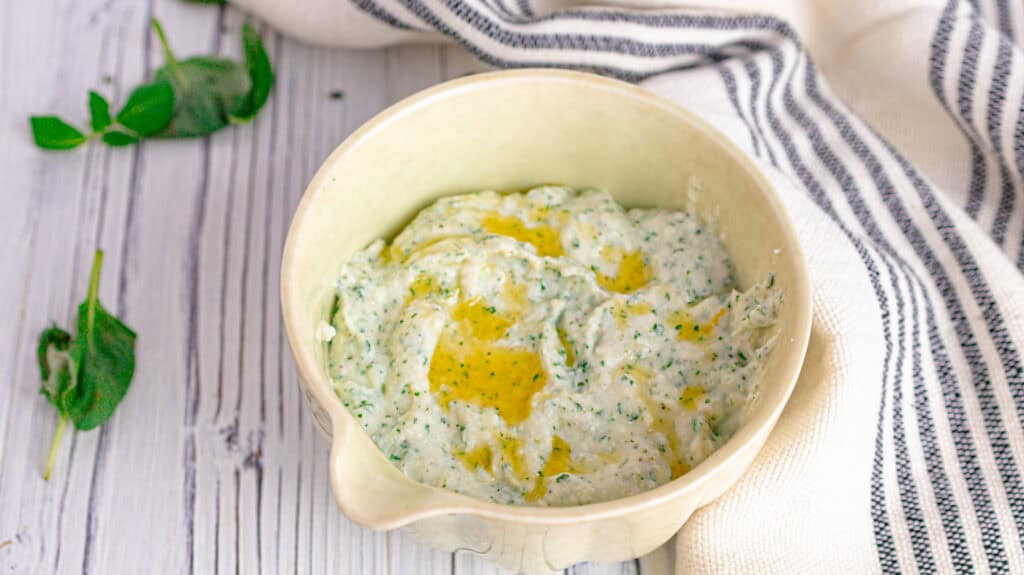
Dips
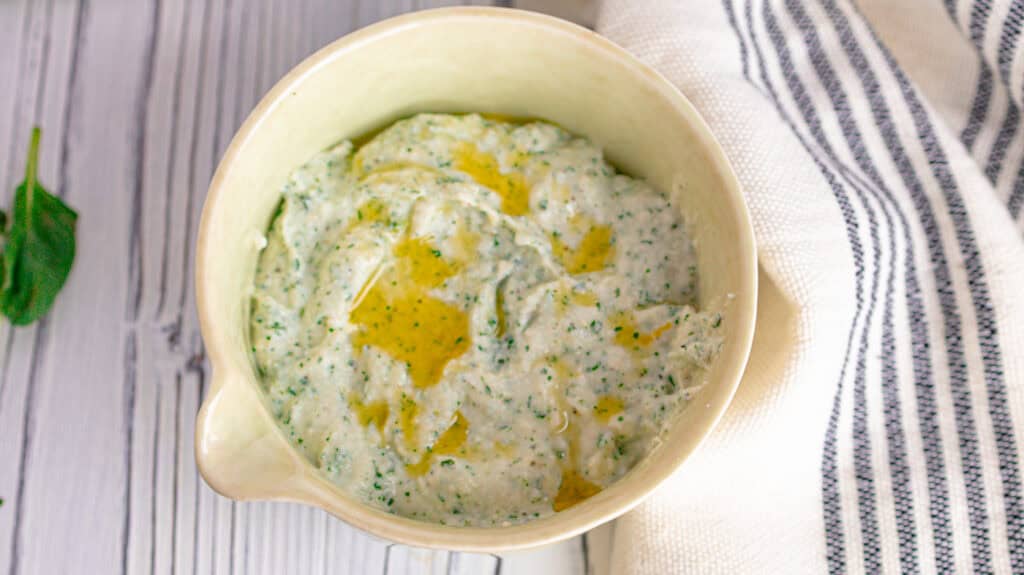
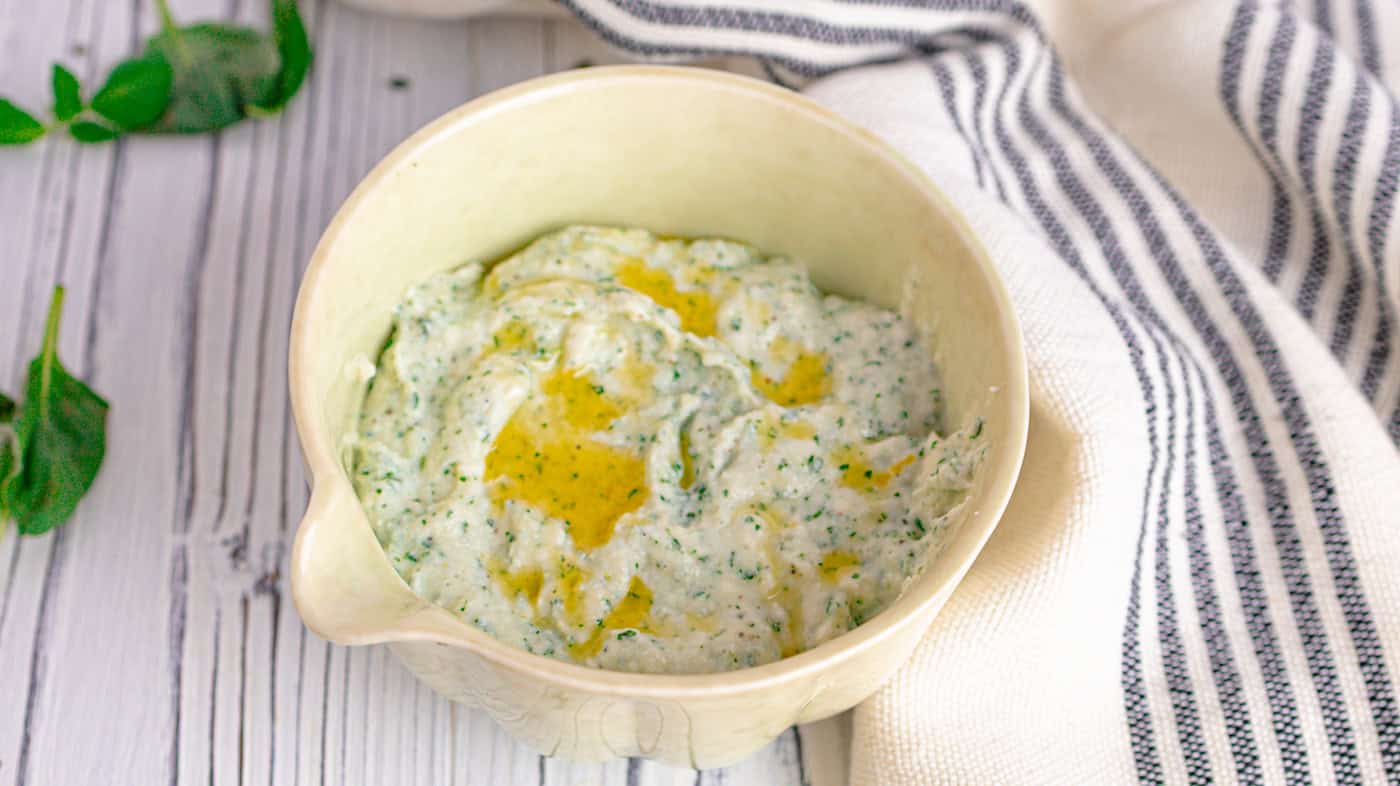
Blending basil with healthy fats or cultured dairy creates rich, nutrient-dense dips that make lean proteins and raw vegetables feel decadent. Try my Whipped Basil & Lemon Ricotta Spread (recipe card at the bottom of this page).
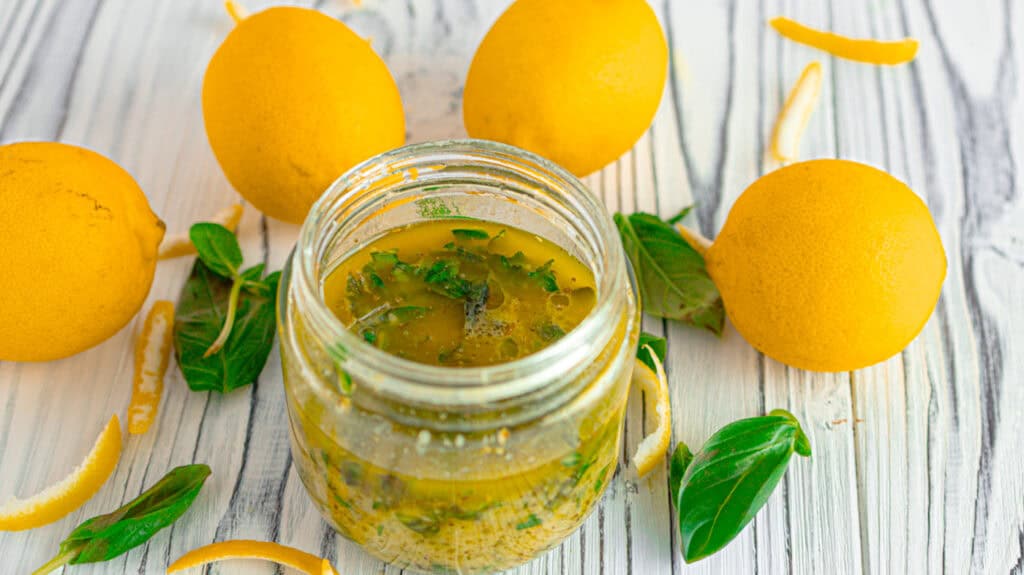
Sugar-Free Dressings & Marinades
Emulsifying fresh basil with cold-pressed olive oil and citrus creates a vibrant green dressing that keeps in the fridge for up to a week. Try my Lemon-Orange Herb Dressing; the ultimate sugar-free Mediterranean dressing for grilled chicken baked fish, or grain bowls.
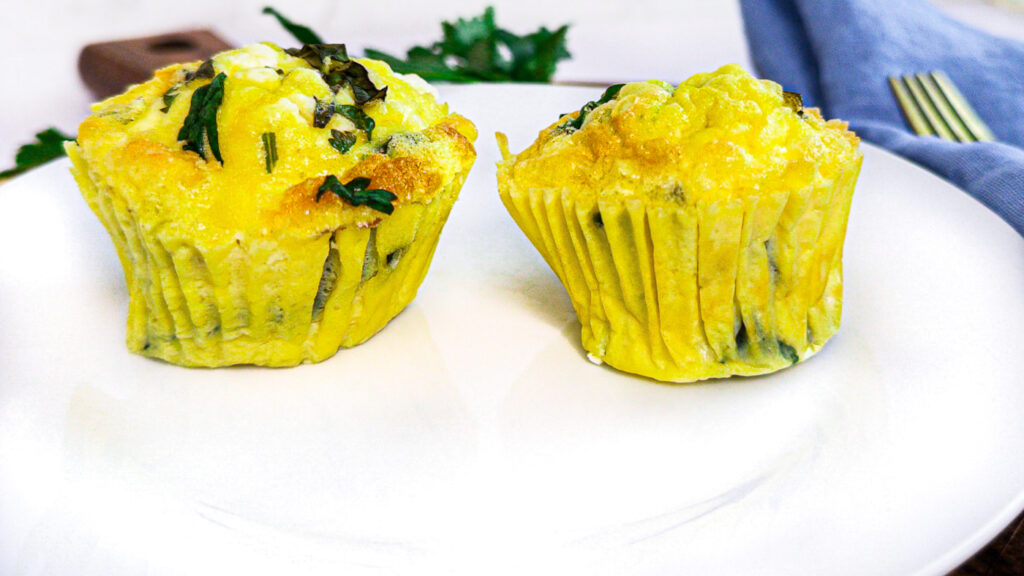
Basil, Cottage Cheese & Feta Egg Bites
A savory, herbaceous twist on the standard breakfast egg muffin. Fresh basil pairs beautifully with cottage cheese, spinach, and the tang of feta, making breakfast feel like a Mediterranean cafe order rather than diet food.
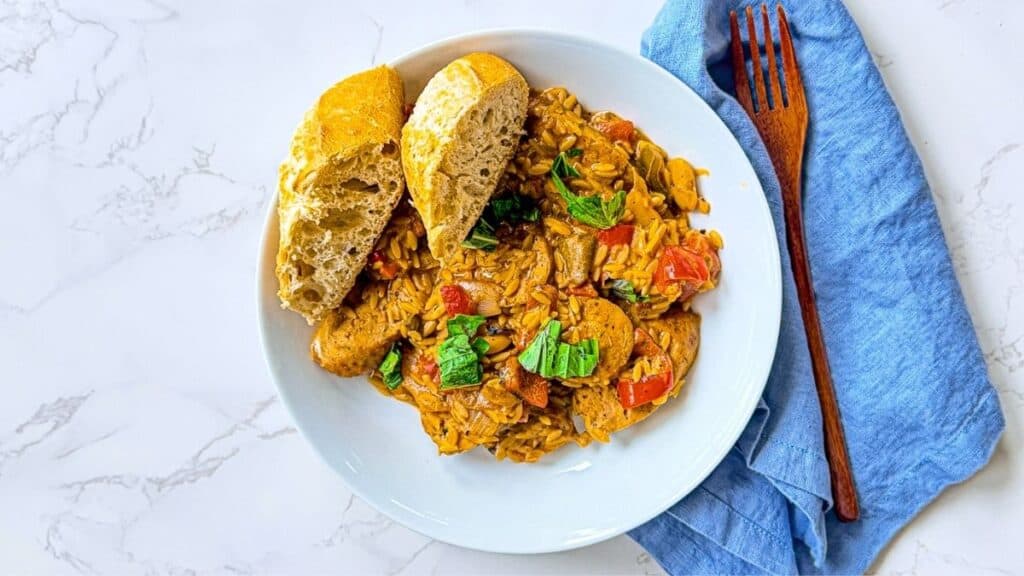
Braised Chicken Sausages with Peppers & Orzo
Sweet chicken Italian sausage, a mess of colorful bell peppers, a little jalapeño for heat, a tomato-herb broth, and fresh basil at the end turns this dish into something you want to scoop up with crusty bread.
Lemon-Basil & Feta Turkey Meatballs
Turkey meatballs are notoriously dry and bland. Using finely chopped fresh basil and a touch of feta cheese folded directly into lean ground turkey locks in moisture and delivers a massive flavor boost without heavy fats.
Charred Tomato & Basil White Bean Salad
Use fresh basil not just as a garnish, but as a primary salad green. Toss blistered cherry tomatoes, cannellini beans, and torn basil leaves with a splash of balsamic, and you’ve created a rustic, hearty side dish.
5-Minute Whipped Basil & Lemon Ricotta
Equipment
- Food processor
Ingredients
- 1 cup part-skim ricotta cheese
- 1/2 cup basil leaves packed, fresh
- 1/2 lemon zested
- 1 small garlic peeled and smashed
- 1/4 tsp sea salt
- 1/4 tsp black pepper
Instructions
- Add all ingredients to a small food processor.
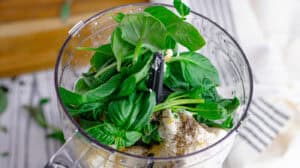
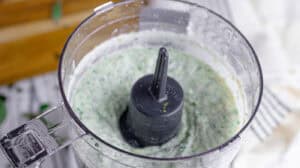
- Blend for 30-45 seconds until smooth, bright green, and fully emulsified. Taste and adjust salt or lemon juice if desired.
Notes
- Store in an airtight container in fridge for up to 5 days.
Nutrition
Frequently Asked Questions About Fresh Basil