
Some recipes you make once, shrug, and move on. Others? You scribble them on a scrap of paper and hide them in your favorite cookbook, just in case. This lemon orange olive oil loaf cake is firmly in the second camp.
This is the cake you show up with when you want to look like you tried, but not in a fussy way. It’s the one you cut into on a lazy Sunday, coffee in hand, no plans except maybe a second slice. The orange-infused olive oil, the tangy Greek yogurt, and all that fresh lemon make your kitchen smell like you actually know what you’re doing. It’s simple, it’s special, and honestly, it’s the kind of dessert that makes you want to linger at the table a little longer.

Why This Recipe Works
This lemon orange olive oil loaf cake isn’t the kind of dessert you throw together when you want to slow down, cut yourself a generous slice, and actually notice what you’re eating. I’ve learned that what makes it special isn’t anything fancy; just a few smart ingredient choices that quietly do all the heavy lifting.
Olive oil is the secret to a tender crumb, and you don’t even need butter for it.
Don’t get me wrong, I love a good butter cake. But they have a habit of turning a little stiff and sad by the next day. Olive oil, on the other hand, keeps things soft and moist, even if you forget about the loaf until tomorrow. And if you use orange olive oil, you get a gentle, fruity warmth that butter just can’t match. If you’ve ever wondered what olive oil actually does in a cake (I definitely have), I’ve got an article that digs into all the details.
Fat-free Greek yogurt is the unsung hero here.
Yogurt pulls triple duty: it keeps the loaf moist, gives it some backbone, and adds just enough tang to make the citrus pop without tipping into sour. Plus, the protein means you get a cake that feels substantial, not just sweet and airy.
Lemon zest and lemon juice are not the same thing, and trust me, you want both.
The zest is where all the fragrance lives; it’s what makes your kitchen smell as if you’ve actually cleaned it. The juice adds acidity that keeps things balanced and helps the loaf rise as it should. If you skip one, you’ll notice. Together, they make the citrus flavor feel complete, not one-note or harsh.
The sugar isn’t just there for show; it’s doing real work.
A full cup of sugar might sound like a lot, but it’s what makes this loaf feel like a treat instead of just another snack. When you mix it with the olive oil, yogurt, and all that fresh citrus, you get something that’s rich and bright, not heavy or overly sweet. This is the cake you bring out when you want to make an ordinary day feel a little special.
Real ingredients, real flavor; no shortcuts.
No fake extracts (just a splash of good vanilla), no boxed mixes hiding in the pantry. Every ingredient here has a job to do, and you can taste the difference in every bite.

Why You’ll Love This Olive Oil Loaf Cake
This is one of those rare cakes that actually improves while you sleep.
Most cakes are at their best the day you bake them, but not this one. The olive oil keeps working its magic overnight, settling into the crumb while the citrus flavor deepens and grows more interesting by morning.
No fancy equipment required here; just the basics you probably already have.
All you need is two bowls, a whisk, and a rubber spatula. The batter comes together in about 15 minutes, which is perfect if you’re like me and want something delicious without turning your kitchen into a science lab.
The flavor is unlike anything I’ve made before, and I’ve baked my way through a lot of loaf cakes.
Orange olive oil might sound a little fancy, but trust me, the first bite will make you wonder why you haven’t used it before. It’s warm and citrusy, with a quiet richness that butter just can’t pull off.
It’s the kind of cake that feels special enough for a celebration, but you don’t need an excuse to make it.
This loaf fits right in at a birthday brunch, but it’s just as happy keeping you company on a quiet Sunday afternoon with coffee. It looks impressive and tastes like you spent way more time on it than you actually did.
If lemon and olive oil together is your thing, my lemon olive oil protein mousse is a lighter everyday option worth bookmarking too.
Every ingredient here is the real deal.
No box mixes, no weird flavorings, and no shortcuts that leave you wondering what you just ate. Just fresh lemon zest, real vanilla, Greek yogurt, and good olive oil. You can taste every single thing that went into it.
The Greek yogurt does more than you expect.
It keeps the crumb moist and tender, but it also adds this gentle tang that makes the citrus pop and keeps the sweetness in check. Plus, there’s a little protein boost you just don’t get from butter cakes.
My tiramisu yogurt cups are another elegant option when you want something that feels celebratory without a lot of effort.

Ingredients Notes & Swaps
Understanding what each ingredient does is the secret to becoming a great baker. In this Lemon Orange Olive Oil Loaf Cake, baking is pure chemistry. Using heavy, acidic Greek yogurt instead of standard milk and butter gives each ingredient a specific role in balancing texture, rise, and flavor.
What Goes In and Why
When you know what each ingredient is actually doing in your batter, baking starts to feel a lot less like a guessing game and a lot more like something you can trust yourself with. Here’s what goes into this Lemon Orange Olive Oil Loaf Cake, and why each one earns its spot.
- All-Purpose Flour: This is the backbone of the whole cake. Two and a quarter cups give you a crumb that holds together when you slice it, yet stays soft enough to feel like a treat.
- Baking Powder and Baking Soda: These two are a team. Baking powder does most of the heavy lifting, giving your loaf its rise. Baking soda jumps in when it meets the yogurt and lemon juice, adding a little extra boost and helping the crumb brown just right. Trust me, you want both in the mix.
- Sea Salt: Three-quarters of a teaspoon might sound like a lot for something sweet, but salt is the secret to keeping this loaf from falling flat. It wakes up the citrus, reins in the sugar, and makes every other flavor stand out. Don’t skip it; you’ll notice if you do.
- Sugar: One cup of sugar is just right for a cake that actually feels like a treat. It’s sweet, but not so much that it drowns out the lemon or olive oil.
- Fat-Free Greek Yogurt: Greek yogurt is the quiet workhorse here. It keeps the crumb moist, adds a gentle tang that makes the citrus pop, and gives the batter enough backbone to bake up evenly.
- Orange Olive Oil: This is the ingredient that makes people ask, ‘Wait, what’s in this?’ Orange olive oil is extra-virgin olive oil with real orange in the mix, bringing a warm, fruity richness that butter just can’t match. It also keeps the loaf moist for days on the counter, which is a small miracle if you ask me.
- Eggs: Three large eggs hold everything together, add a little richness, and help the loaf set up just right in the oven. If you remember to let them come to room temperature, your batter will mix up smoother. If you forget, don’t worry; it’ll still work.
- Lemon Zest: Three tablespoons of zest is where all the flavor lives. The oils in the lemon skin are what make the whole kitchen smell like sunshine. Use a fine microplane and stop before you hit the white part underneath; the pith is where the bitterness hides.
- Lemon Juice: Six tablespoons of fresh lemon juice keep the cake bright and lively. It balances out the sugar, wakes up the baking soda, and keeps the whole thing from feeling heavy. Always use fresh lemons here; bottled juice just doesn’t have the same spark.
- Vanilla: One and a half teaspoons of real vanilla rounds out the citrus and adds a little warmth in the background of every bite. It’s not the star, but you’d miss it if it wasn’t there.

Substitutions for the Lemon Loaf
Since this loaf is based on pure chemistry, a few ingredients can be swapped. Listed below are the ingredients that can be swapped and exactly what they can be swapped with.
- All-Purpose Flour: Can be replaced with cake flour as it has less protea.
- Baking Soda: If you’re out of baking powder, use 21/4 tablespoons of baking powder.
- Sugar: Can be replaced with brown sugar or honey
- Greek Yogurt: Replace the fat-free with 5% fat and remove the olive oil.
- Orange Flavored Olive Oil: Use any flavored olive oil, or a dessert olive oil.
- Lemon Zest: Replace with lime or orange zest.
- Lemon Juice: Replace with lime or orange juice, or 1 tablespoon of white vinegar.
How to Make the Lemon Orange Olive Oil Loaf Cake
This batter comes together quickly and without a stand mixer. You need two bowls, a whisk, and about 15 minutes of active time.
Heat your oven to 350°F. Grease loaf pan with olive oil, ghee, or line with parchment.
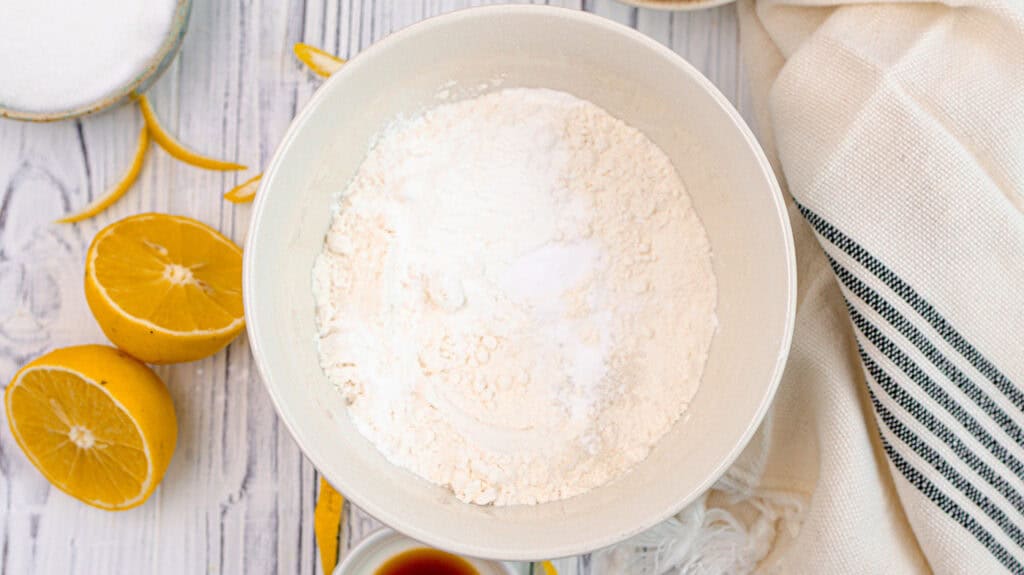
In a large bowl, whisk together the flour, baking powder, baking soda and sea salt until evenly combined. Set this aside.

In a second bowl, whisk together the sugar, Greek yogurt, orange olive oil, eggs, lemon zest, lemon juice, and vanilla extract. Whisk until the mixture looks smooth and the sugar has mostly dissolved, about 60 seconds.

Pour the wet ingredients into the bowl of dry ingredients. Use a rubber spatula to fold everything together until just combined. Stop as soon as you no longer see dry flour. Over-mixing develops the gluten and makes your loaf tough rather than tender.

Pour into loaf pan, and bake 50 -60 minutes. Check your loaf crust color after 40 minutes. If it’s golden brown, wrap the top with foil. Take out when a toothpick comes out with moist crumbs.

Let the loaf cool in the pan for 15 minutes, then use the parchment overhang to lift it onto a wire rack. Allow it to cool completely before slicing, at least 30 to 45 minutes. Slicing too early compresses the crumb and makes the texture gummy.

Lift out and cool fully before slicing, about 2 hours. You’ll know when it’s fully cool when the bottom of the loaf is cool, not warm.

For the lemon glaze, mix 1 cup of powdered sugar with 3 tablespoons of lemon juice. Pour over cooled cake. Let the glaze harden at room temperature for 2 hours before cutting.
For another elevated yogurt-based dessert, try my vanilla rose strawberry parfait.


Lemon Orange Olive Oil Loaf Cake
Equipment
- 9×5 Loaf Pan
- 2 Mixing Bowls
- 1 Whisk
- 1 Zester
Ingredients
Dry Ingredients
- 2 1/4 cups all-purpose flour
- 2 1/4 tsp baking powder
- 1/4 tsp baking soda
- 3/4 tsp sea salt
- 1 cup sugar
Wet Ingredients
- 1 1/4 cup Greek yogurt fat free
- 1/3 cup Orange olive oil
- 3 large eggs
- 3 tbsp lemon zest
- 6 tbsp lemon juice
- 1 1/2 tsp vanilla extract
Lemon Glaze
- 1 cup powdered sugar
- 2 tbsp lemon juice
Instructions
Loaf
- Preheat oven to 350F. Line a 9×5 loaf pan with parchment paper, or brush with olive oil, or ghee.In a mixing bowl, mix 2 1/4 cups all-purpose flour, 2 1/4 tsp baking powder, 1/4 tsp baking soda, 3/4 tsp sea salt, 1 cup sugar.

- In a medium mixing bowl add 1 1/4 cup Greek yogurt, 1/3 cup Orange olive oil, 3 large eggs, 3 tbsp lemon zest, 6 tbsp lemon juice, 1 1/2 tsp vanilla extract. Mix until creamy.

- Add dry ingredient to wet and mix gently.

- Pour in loaf pan and bake for 60 minutes. Check the loaf color after 40 minutes. If it's golden brown, cover the top with foil. Loaf is done when tooth pick comes out with moist crumbs.

- Let cool in pan for 10 minutes. Using a tooth pick, poke tiny holes in the top of the loaf.

- Remove from pan and let cool completely, about 2 hours. You'll know it's completely cool when the bottom is cool.

Lemon Glaze
- Whisk the 1 cup powdered sugar and 2 tbsp lemon juice in a small bowl until completely smooth. If it feels too thick to pour, add a few drops of lemon juice. If it's too runny, and a spoonful of powdered sugar.Pour over loaf and let it harden at room temperature for 2 hours.

Notes
- Store wrapped tightly at room temperature for 3 days.
- Refrigerate up to 5 days.
- Freeze individual slices up to 2 months.
Nutrition
Frequently Asked Questions