This Greek yogurt olive oil cake is what I reach for when I want something with my coffee or need a quick dessert that looks fancier than it is. Just add some berries and a drizzle of honey, and you’re set. It’s got that balance of protein and healthy fats, so it actually fits into a lighter, more mindful way of eating. If you’re on a GLP-1 journey (I’ve been on my since 2025) and craving something that feels a little special but won’t throw you off, this cake is your friend. It’s the kind of recipe you’ll come back to whenever you need a little sunshine on your plate.
Why This Recipe Works
Greek yogurt and extra-virgin olive oil do all the heavy lifting here, making the crumb tender and moist without a stick of butter in sight. The yogurt brings a gentle tang and a little protein, and the olive oil keeps things soft even if you forget about the cake for a day or two.
If you’d like to learn more about baking with olive oil, and which oils work best in what type of baking, check out my Olive Oil in Desserts Guide.

Is This Cake GLP-1 Friendly?
I made this Greek Yogurt Olive Oil Cake with small, satisfying slices in mind. The Greek yogurt brings protein, the olive oil adds healthy fat, and there’s just enough sweetness to keep things interesting. You get steady energy, not a sugar rush, or a sugar crash.
It fits right into a GLP-1 lifestyle, but it never feels like a diet cake. It’s just thoughtful, balanced, and a great addition to the Mediterranean diet.
My Favorite Pairing Suggestions
This Greek yogurt olive oil cake is a great dessert with my Juicy Lemon Herb Chicken and Mediterranean baked Cod with Lemon Herb Tomatoes. It can serve as a wonderful brunch side paired with my Whipped Protein Yogurt Bowl. And, for a decadent treat, top it with my Lemon Olive Oil Protein Mousse.
Why You’ll Love This Olive Oil Cake
- You only need one bowl for this, and you’ll have cake before you’ve even finished your coffee. No complicated steps, no kitchen gymnastics, just simple, honest baking.
- The crumb stays soft for days, even if you accidentally leave it out on the counter. I’ve done it more than once, and it’s still just as good.
- It tastes like something you’d stumble across in a tiny seaside café, the kind where you wonder if you could just move in and eat cake every day. It’s pure Mediterranean comfort.
- It’s lighter than your usual cake, with a little extra protein for good measure, and it’s the kind of treat that actually works on those GLP-1 days when nothing else sounds quite right.
- You can have it for breakfast, as a snack, or for dessert, basically, whenever you find yourself needing a little pick-me-up. I won’t judge if you go back for seconds.

Ingredients Notes & Smart Swaps
This Greek Yogurt Olive Oil Cake is all about simple, high-quality ingredients that bring something special to the recipe, whether it be flavor, texture, or a little nutrition boost. Below, I’ll break down what each part adds, and how to pick the best stuff at the store.
What Goes In and Why It Works
Greek Yogurt: This is my secret weapon for cakes that stay soft and tender, even after a couple of days on the counter. It brings in moisture, a little protein, and that gentle tang I love. Plus, it wakes up the baking soda, so you get a cake that’s light and velvety instead of dense and sad.
Olive Oil: Olive oil gives the cake a rich, plush crumb that stays moist. Go for a mild fruity oil so the citrus can shine.
Eggs: These little guys hold everything together and help the cake rise just right. They’re also the reason you get that pale golden color and a smooth, almost custardy middle. I never skip them unless I absolutely have to.
Sugar: Even in a GLP-1-friendly cake, a little sugar goes a long way. It sweetens things up, helps with browning, and keeps the tang from the yogurt and citrus in check. I’ve learned not to skip it entirely, or the cake just tastes unfinished.
All-Purpose Flour: This is the backbone of the cake. It soaks up all that yogurt and oil while still keeping things soft and tender. I’ve tried swapping it out before, but nothing else gives quite the same texture.
Baking Powder: This is what gives the cake its lift. Without it, you end up with something more like a pancake than a cake. I always double-check that mine isn’t expired, just in case.
Baking Soda: This one teams up with the yogurt and citrus to give the cake a little extra height and softness. It’s a small thing, but it makes a big difference.
Salt: Never skip the salt. It brings out all the flavors, especially the citrus and vanilla. I’ve forgotten it before, and let’s just say, the cake tasted like it was missing its spark.
Lemon Zest: This is what makes the whole cake smell like sunshine. It brightens everything up without adding more sweetness. I always use fresh zest if I can; it’s worth the extra minute.
Orange Zest: I love how orange zest softens the lemon’s sharpness and adds a gentle, sweet warmth. It’s like a little hug for the cake.
Vanilla Extract: This is the finishing touch that ties everything together. It smooths out the citrus and adds a cozy depth. I never skip it.
Substitutions for Your Olive Oil Cake
Greek Yogurt: use plain whole milk yogurt or labneh with a little milk stirred in.
Olive Oil: Avocado oil or a lighter olive oil steps in nicely.
Sugar: You can use any sugar substitute you prefer, just make sure to check the measurements; not all sweeteners are at a 1:1 ratio with sugar.
Flour: Use whole-what pastry flour for nuttiness. I don’t recommend using almond or coconut flour; they don’t make great olive oil cakes.
Eggs: If you’re out of eggs or just not feeling them, 2% Greek yogurt (about a quarter cup per egg) works in a pinch.
Lemon Zest: Use orange or lime zest. Lemon extract will work well too.
Orange Zest: Mandarin zest or a few drops of orange blossom water.
Vanilla Extract: Replace with vanilla bean paste or almond extract.
How to Make the Greek Yogurt Olive Oil Cake

Start with the wet ingredients.
Before you get started, use room-temperature ingredients. Cold yogurt and eggs will cause the batter to bake unevenly. Then, grab a big bowl and a whisk, and get ready to make things smooth.
Scoop in the Greek yogurt, crack in the eggs, pour in the olive oil, and add the sugar, citrus zest, and vanilla. Whisk it all together until it looks creamy and inviting. Make sure this part is fully blended with no lumps; lumps of yogurt will create dense pockets in the cake once baked.

Now for the dry stuff.
Sprinkle the flour, baking powder, baking soda, and salt right over your wet mix. Gently fold everything together. You’re aiming for no dry streaks, but don’t stress about a few little lumps.

Time to bake.
Pour your batter into a parchment-lined 8-inch round pan. If your pan is a different size or shape, don’t worry, just check a little earlier if it’s thinner, since it’ll bake faster. Mini loaf pans are fair game too, but they can be done in as little as 20 minutes, so keep an eye out. Bake at 350°F for about 28 to 32 minutes, or until the center springs back when you poke it gently.
Expect a pale top to the cake. The cake won’t turn a deep golden brown because of the yogurt and lower sugar.

Let it cool.
Let your cake cool completely before slicing. Yogurt cakes need time to set their crumbs. Cutting too early makes the texture seem gummy or underbaked.
Serve
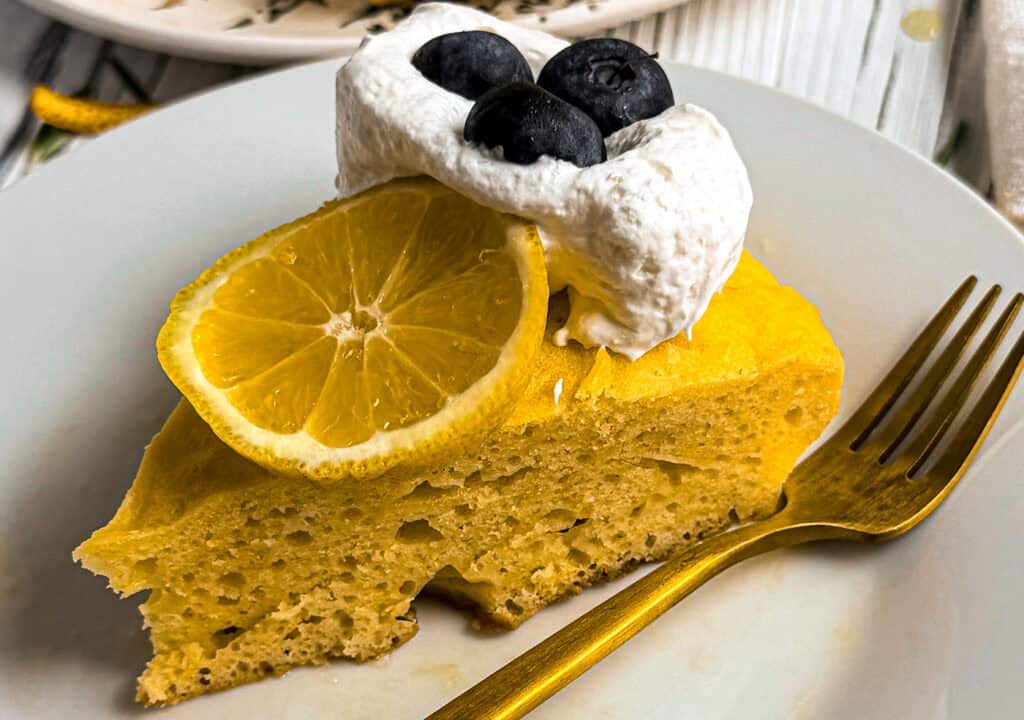
You can keep it simple with a dusting of powdered sugar, or go for a dollop of Greek yogurt and a handful of berries if you’re feeling fancy. If you want to dress it up even more, a quick citrus glaze (just juice and powdered sugar) is lovely. Whipped cream is always welcome, whether you keep it plain or add a little vanilla or citrus zest. Honestly, even a spoonful of sweetened ricotta or a scoop of vanilla ice cream can make each slice feel like a little celebration.

Greek Yogurt Olive Oil Cake
Equipment
- 1 8-inch round pan
- 1 Zester
- 1 Whisk
- 1 Sheet of parchment paper
- 1 Mixing Bowl
- 1 Oven
Ingredients
- 240 grams Greek yogurt 2 or 5% plain is best
- 72 grams Olive Oil fruity extra virgin is best
- 67 grams Sugar pure cane
- 120 grams All-purpose flour
- 2 large Eggs
- 4 grams Baking powder
- 1.25 grams Baking soda
- 1.25 grams Sea salt
- 1 whole Lemon zest
- 1 whole Orange zest
- 4 grams Vanilla extract
Instructions
- Preheat your oven at 350°F.
- Take out all your ingredients and let them sit until they reach room temperature.
- In a medium mixing bowl add the yogurt, eggs, olive oil, sugar, zests, and vanilla. .

- Mix until creamy. Make sure it's fully blended as yogurt will create dense pockets in the cake one baked

- Add flour, baking powder + soda, and salt over the wet mix. Gently fold together until just mixed.

- Pour your batter into a parchment-lined 8-inch round pan. If your pan is a different shape or size, don't worry, just check a little earlier. Bake for about 28 to 30 minutes, or until the center springs back when you poke it gently.Don't worry if it's more of a soft, light gold color than a deep brown. Yogurt cakes are shy about browning, but they make up for it in tenderness.
- Let your cake cool completely on a rack. Yogurt cakes need time to set their crumb. Cutting too early makes the texture seem gummy or underbaked.
Notes
- Lasts covered on counter for 2-3 days.
- Refrigerate for up to 4-5 days.
- Wrap tightly and freeze for up to 2 months.
Nutrition
Frequently Asked Questions